






What's Happening?
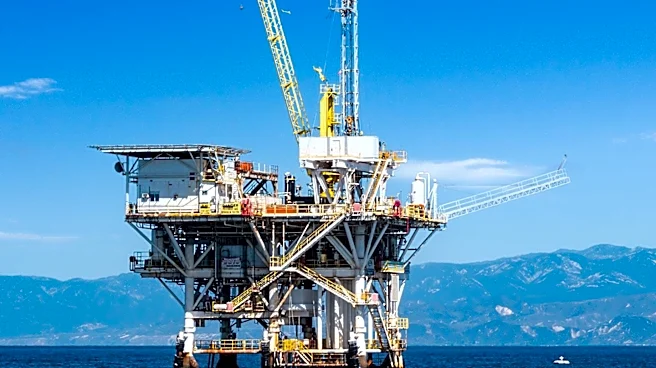
A federal judge has ruled that Sable Offshore Corp., a Texas-based oil firm, can continue pumping oil through pipelines along the Santa Barbara County coast. The ruling also transfers much of the regulatory authority over the oil operation from California
state agencies to federal officials. This decision comes after the Trump administration issued an emergency order, invoking the Defense Production Act, to allow Sable to resume operations. The company's Santa Ynez Unit had been dormant since a 2015 pipeline burst near Refugio State Beach. U.S. District Judge Stephen V. Wilson, while allowing the company to continue pumping, also fined Sable nearly $1.5 million for violating a federal consent decree that outlined specific restart regulations. The judge's 45-page ruling states that the Defense Production Act order preempts state laws conflicting with Sable's ability to operate the onshore pipeline. The new oversight system will still incorporate all state requirements for the pipeline, but compliance will be regulated by the U.S. Pipeline and Hazardous Materials Safety Administration instead of state agencies. Sable will be required to share biannual reports with California, and the state can address noncompliance issues in court.
Why It's Important?
This ruling is a significant setback for California officials and environmental activists who have opposed Sable Offshore Corp.'s project due to concerns about pipeline safety and environmental impact. It highlights a broader conflict between federal and state authority, particularly concerning energy projects and environmental regulations. Legal experts suggest that this decision could set a precedent for how the federal government, specifically the Department of Energy or the Department of the Interior, might use the Defense Production Act to override state environmental laws in other energy projects. The transfer of regulatory authority from California to federal agencies diminishes the state's direct control over a critical environmental and economic resource. While the judge's decision aims to balance energy security with environmental protection, it raises questions about the effectiveness of state-level environmental safeguards when federal intervention occurs. The financial penalty against Sable underscores the company's past non-compliance, yet the core of the ruling favors continued oil operations under federal purview, potentially impacting California's efforts to transition to cleaner energy and protect its coastline.
What's Next?
The ruling is likely to be appealed by California officials and environmental groups, potentially leading to further legal battles in higher courts, such as the U.S. 9th Circuit Court of Appeals. California Attorney General Rob Bonta's office has already indicated it will continue to fight against attempts to interfere with the state's sovereign authority and is reviewing all legal options. The outcome of these appeals will determine the long-term regulatory framework for Sable's operations and could influence future federal-state disputes over energy and environmental policy. Sable Offshore Corp. will need to comply with the new federal oversight by the U.S. Pipeline and Hazardous Materials Safety Administration and continue to provide biannual reports to California. The company also faces ongoing challenges, including criminal charges for violating state environmental law, a congressional investigation, and lawsuits related to insider trading claims. These legal and regulatory pressures will continue to shape Sable's operational environment and public perception.
Beyond the Headlines
The federal judge's decision extends beyond the immediate operational status of Sable Offshore Corp., touching upon fundamental questions of federalism and environmental governance in the United States. The invocation of the Defense Production Act by the Trump administration to prioritize oil production over state environmental concerns highlights a tension between national energy security directives and local environmental protection efforts. This case could embolden future administrations to use similar federal powers to bypass state regulations, potentially undermining states' abilities to manage their natural resources and protect their environments. The ethical dimension of a company being fined for past violations while simultaneously being granted continued operational rights under federal protection raises questions about accountability and the balance of power. Furthermore, the ruling could influence public discourse on the role of federal intervention in state-level environmental policy, particularly in states like California that are at the forefront of climate action and environmental conservation.