







What's Happening?
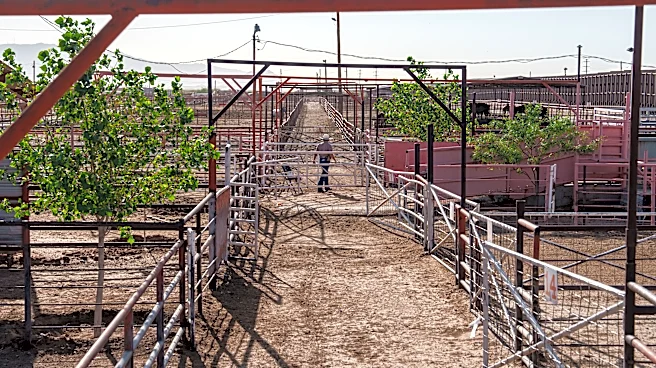
The Texas barbecue industry is experiencing significant challenges due to a historic shortage of beef, which has led to rising prices and the closure of several barbecue restaurants. According to the U.S. Department of Agriculture, the U.S. cattle supply
has dropped to a 75-year low, causing beef prices to soar. This shortage is attributed to various factors, including recent droughts that have limited grazing areas and feed issues for cattle. Additionally, high fuel prices and fertilizer supply issues, exacerbated by the Iran war, are contributing to the difficulties faced by ranchers. As a result, beloved establishments like Kirby's BBQ in New Caney and Brett's BBQ Shop in Katy have been forced to close. The price of brisket, a staple in Texas barbecue, has increased dramatically, impacting both restaurant owners and consumers.
Why It's Important?
The beef shortage and rising prices have significant implications for the Texas barbecue industry, which is a cultural and economic staple in the state. The increased cost of beef, particularly brisket, is driving many barbecue restaurants out of business, affecting local economies and employment. Consumers are also feeling the impact, with ground beef prices up nearly 15% since last year. The situation highlights the vulnerability of the food supply chain to environmental and geopolitical factors. The prolonged recovery period for cattle herds means that relief from high prices may be years away, posing long-term challenges for the industry. This situation underscores the need for strategic planning and support for the agricultural sector to mitigate such impacts in the future.
What's Next?
The rebuilding of the U.S. cattle herd is expected to take years, and the full impact on beef prices and supply will unfold gradually. In the meantime, restaurant owners are encouraging customers to support local barbecue businesses and consider alternatives to brisket, such as pork, chicken, and turkey. Industry leaders and economists are closely monitoring the situation, and there may be calls for policy interventions to support ranchers and stabilize the beef supply. The Texas Restaurant Association and other stakeholders may advocate for measures to address the underlying issues contributing to the shortage, such as drought relief and support for sustainable farming practices.