






What's Happening?
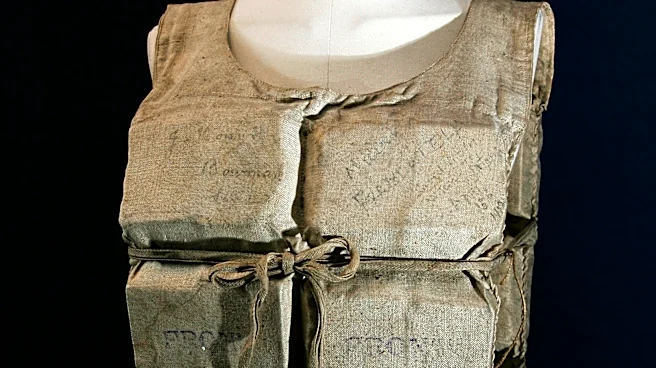
A life jacket worn by Laura Mabel Francatelli, a first-class passenger who survived the sinking of the RMS Titanic, was auctioned for 670,000 pounds ($906,000) in Devizes, England. The life jacket, signed by Francatelli and other survivors from her lifeboat,
was the highlight of a Titanic memorabilia auction conducted by Henry Aldridge & Son. The auction also featured a seat cushion from one of the Titanic lifeboats, which sold for 390,000 pounds ($527,000) to the owners of Titanic museums in Tennessee and Missouri. The Titanic, known as the world's most luxurious ocean liner, sank on April 15, 1912, after hitting an iceberg, resulting in the deaths of approximately 1,500 of its 2,200 passengers and crew.
Why It's Important?
The auction of Titanic memorabilia, including Francatelli's life jacket, underscores the enduring fascination with the Titanic disaster. The high prices achieved at the auction reflect the historical significance and emotional resonance of the Titanic story, which continues to captivate people worldwide. The items serve as tangible connections to the tragic event and the diverse range of passengers aboard, from wealthy individuals to those of modest means. The auction highlights the ongoing interest in preserving and commemorating the stories of those who experienced the disaster, contributing to the cultural and historical narrative surrounding the Titanic.
What's Next?
The sale of Titanic memorabilia is likely to continue as collectors and museums seek to acquire pieces of history associated with the ill-fated ship. The high auction prices may encourage more owners of Titanic-related items to consider selling them, potentially leading to further auctions. Museums dedicated to the Titanic may also seek to expand their collections, offering visitors deeper insights into the ship's history and the stories of its passengers. The continued interest in Titanic artifacts may also inspire new exhibitions and educational programs, keeping the legacy of the Titanic alive for future generations.
Beyond the Headlines
The auction of Titanic memorabilia raises questions about the ethics of profiting from items associated with tragic events. While these artifacts serve as important historical records, their sale can be seen as commodifying human suffering. The controversy surrounding lifeboat No. 1, which carried Francatelli and her companions, highlights issues of class and privilege during the disaster, as it launched with only 12 people despite having capacity for 40. This aspect of the Titanic story continues to provoke discussions about social inequality and the decisions made during emergencies.