






What's Happening?
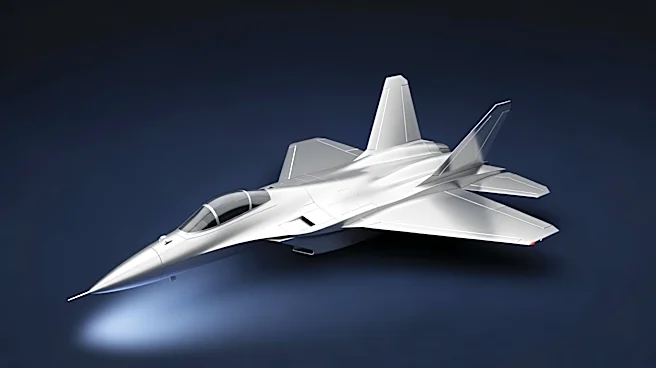
The Trump Administration has reaffirmed its commitment to the development of the F-47, a sixth-generation fighter aircraft, by requesting over $5 billion from Congress for fiscal year 2027. This funding is part of a broader strategy to ensure air superiority
and deter global threats. The F-47 project, led by Boeing, is on track for its first flight in 2028. This initiative is part of the Next Generation Air Dominance (NGAD) program, which aims to integrate advanced technologies for enhanced combat capabilities. The administration's budget request emphasizes the rapid development and production of the F-47, highlighting its strategic importance. In contrast, the F/A-XX program, a similar initiative for the Navy, faces significant budget cuts, receiving only $140 million compared to the F-47's multi-billion dollar funding. This decision reflects concerns about the feasibility of simultaneously developing two sixth-generation fighter programs.
Why It's Important?
The prioritization of the F-47 fighter development underscores the U.S. government's focus on maintaining military superiority in the face of evolving global threats. By investing heavily in the F-47, the administration aims to project power and secure air dominance, which is crucial for national defense. The decision to allocate more resources to the F-47 over the F/A-XX program indicates a strategic shift towards enhancing the Air Force's capabilities. This move could have significant implications for defense contractors like Boeing and Lockheed Martin, as well as for the broader defense industry. The development of advanced fighter jets also has potential economic impacts, including job creation and technological advancements. However, the reduced funding for the Navy's program may lead to challenges in maintaining a balanced military force across different branches.
What's Next?
The next steps involve Congress reviewing and potentially approving the proposed budget allocations. Given Congress's authority over U.S. spending, there is a possibility that lawmakers may challenge the administration's decision to cut funding for the F/A-XX program. If Congress overrides these cuts, it could lead to a reevaluation of the current strategy. Additionally, the successful development and deployment of the F-47 will require continued collaboration between the government and defense contractors. As the project progresses, there will likely be further discussions on integrating new technologies and ensuring the aircraft meets the required performance standards. The outcome of these developments will shape the future of U.S. military capabilities and influence global defense dynamics.