






What's Happening?
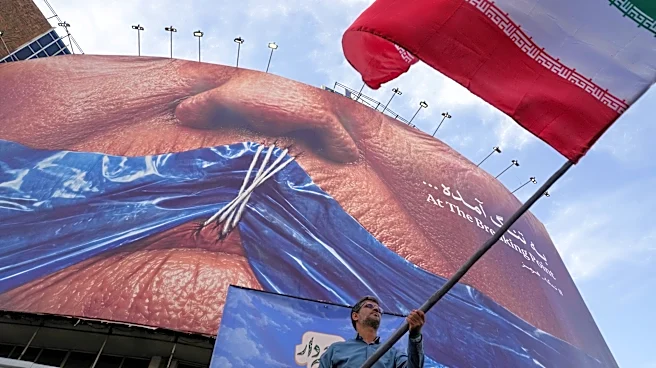
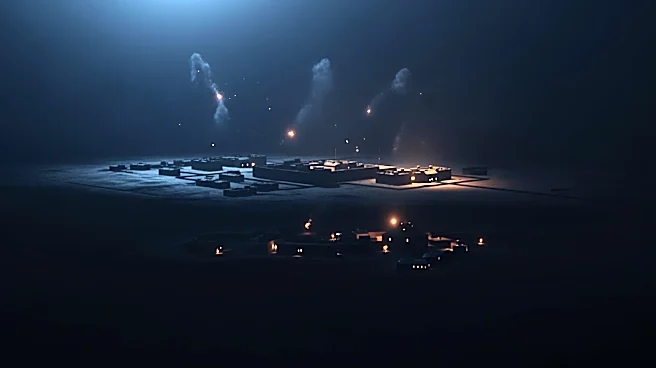
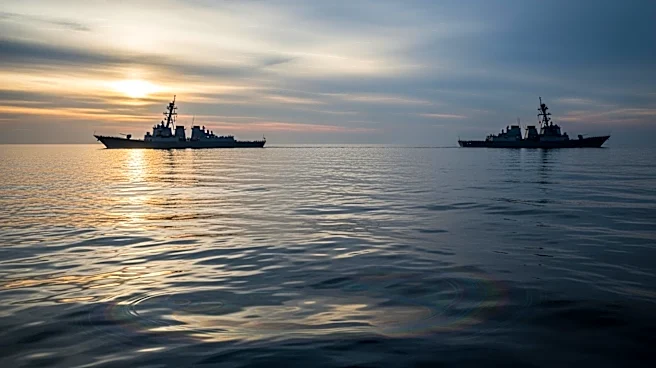
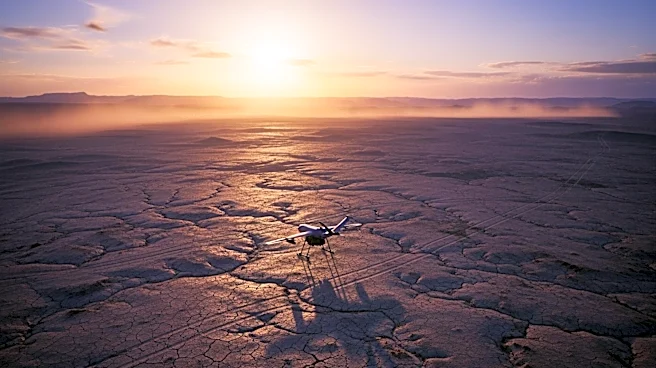
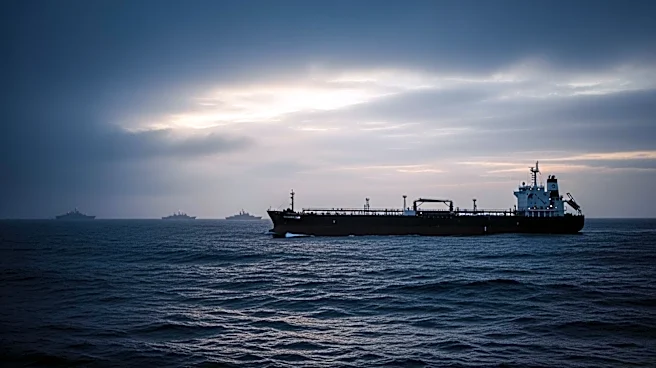
Recent tensions between the U.S. and Iran have escalated following a skirmish in the Strait of Hormuz. President Trump disclosed details of an Iranian attack on three U.S. destroyers, which were not damaged. The destroyers, identified as the USS Truxtun,
USS Rafael Peralta, and USS Mason, successfully defended against missile and drone attacks. Concurrently, satellite images revealed large oil slicks off Iran's Kharg Island, raising concerns about potential environmental impacts. The U.S. blockade has reportedly reduced Iranian oil production, and there are claims that oil may have been dumped into the sea due to storage shortages.
Why It's Important?
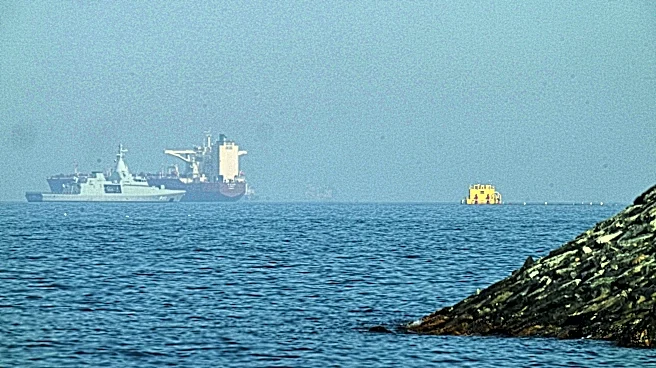
The incident highlights ongoing geopolitical tensions in the Middle East, particularly in the strategically vital Strait of Hormuz, through which a significant portion of the world's oil passes. The U.S. military's engagement with Iranian forces underscores the fragile nature of regional security and the potential for conflict escalation. The environmental implications of the oil slicks could affect marine life and the economies of Gulf states reliant on clean waters for fishing and tourism. The situation also reflects broader U.S.-Iran relations, with potential impacts on global oil markets and international diplomatic efforts to stabilize the region.
What's Next?
The U.S. and Iran may face increased pressure to engage in diplomatic negotiations to prevent further military confrontations. Environmental agencies and Gulf states might demand immediate action to address the oil slicks to prevent ecological damage. The international community, including the United Nations, could become involved in mediating the conflict and ensuring compliance with maritime laws. The U.S. military may continue to monitor the region closely, ready to respond to any further provocations.