




What's Happening?
The United Nations has recognized the Sahel Integrated Resilience Initiative as one of three new World Restoration Flagships. This initiative, led by the United Nations World Food Programme (WFP), has significantly strengthened food security and livelihoods
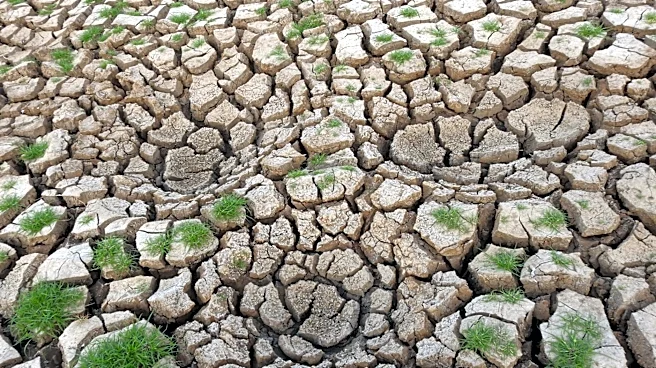
for over four million people across Burkina Faso, Chad, Mali, Mauritania, and Niger. Since 2018, the program has rehabilitated more than 335,000 hectares of degraded land, leading to improved agricultural production and a reduction in humanitarian needs. The recognition was announced at the seventeenth session of the Conference of the Parties to the UN Convention to Combat Desertification (UNCCD COP17) and falls under the UN Decade on Ecosystem Restoration. The initiative employs various restoration techniques, including water-harvesting infrastructure, agroforestry, wetland restoration, and the planting of native species to enhance soil fertility and vegetation cover in dryland ecosystems. Beyond environmental efforts, the program also incorporates school feeding, nutrition interventions, and livelihood opportunities to build community resilience against drought, conflict, and climate shocks.
Why It's Important?
The Sahel region faces severe challenges, including rapid population growth, climate pressure, economic hardship, and food insecurity, with an estimated 7.4 million people projected to experience crisis levels of food insecurity during the June-August 2026 lean season. The success of the Sahel Integrated Resilience Initiative demonstrates that land degradation is reversible and that targeted investments can yield substantial benefits. By restoring ecosystems, the initiative not only improves environmental health but also creates jobs and enhances resilience for millions. Satellite monitoring indicates that 75 percent of WFP resilience sites have shown improved soil and vegetation conditions, and participating households have maintained or improved their food security, with an 11 percent decline in the proportion requiring humanitarian assistance during the lean season. This model provides a critical framework for addressing interconnected issues of climate change, food security, and poverty in vulnerable regions globally, highlighting the importance of integrated approaches that combine environmental restoration with socio-economic development.
What's Next?
The Sahel Integrated Resilience Initiative aims to restore an additional 470,000 hectares by 2030, boost biodiversity, and sequester up to 20 million tons of CO2. This ambitious target underscores the ongoing commitment to scaling up restoration efforts and building lasting resilience in the region. The UN's recognition is expected to attract greater investment, which is crucial for expanding these efforts and achieving long-term food security. The initiative's continued implementation will involve partnerships with governments, local communities, UN agencies, and donors, including Germany’s Federal Ministry of Economic Cooperation and Development. Future steps will likely focus on replicating successful interventions, such as dune stabilization and the construction of floodwater-harvesting dikes, across more villages and countries within the Sahel. The transparent monitoring of progress through the Framework for Ecosystem Restoration Monitoring will ensure accountability and provide valuable data for future restoration projects worldwide.
Beyond the Headlines
The initiative's success extends beyond immediate environmental and food security gains, offering a blueprint for sustainable development in regions grappling with similar challenges. It highlights the interconnectedness of environmental health, economic stability, and human well-being. The emphasis on local communities and their active participation in restoration efforts fosters a sense of ownership and ensures the long-term sustainability of the projects. Furthermore, the program's holistic approach, which includes nutrition interventions and livelihood opportunities, addresses the root causes of vulnerability, moving beyond mere humanitarian aid to build self-sufficiency. This integrated strategy can serve as a powerful example for international development efforts, demonstrating that investing in ecological restoration is a strategic investment in human capital and regional stability, ultimately contributing to global peace and security by mitigating drivers of conflict such as resource scarcity and displacement.