






What's Happening?
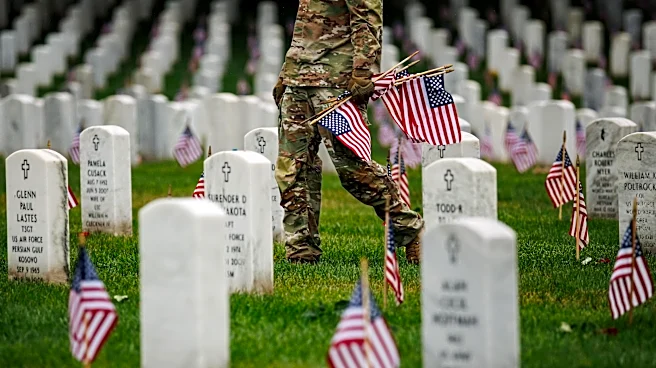
Representative Jack Bergman has introduced legislation and sent a letter to the Department of Veterans Affairs (VA) aimed at facilitating the establishment of a veterans cemetery in Michigan’s Upper Peninsula. The proposed 'Veterans Cemetery Access Modernization
Act' seeks to revise how the VA assesses underserved areas for veteran burial access. Currently, the VA uses straight-line miles, but Bergman's bill would mandate considering actual driving distance, which is more reflective of real-world travel conditions, especially in geographically challenging regions. The legislation also requires regular congressional reporting on areas lacking nearby burial access and calls for new cemetery proposals in these underserved regions. Additionally, Bergman, along with other Michigan lawmakers, urged the VA to consider an Upper Peninsula site for federal funding under existing rules, citing the agency’s rural cemetery initiative as a precedent for using geographic isolation in funding decisions. This initiative addresses the critical need for accessible burial options for veterans and their families in a region currently without an active veterans cemetery.
Why It's Important?
This legislative push is significant for veterans and their families in Michigan’s Upper Peninsula, who currently face considerable travel distances to access national veterans cemeteries. By proposing a change from straight-line miles to actual driving distance, the bill acknowledges the practical difficulties of travel in rural and geographically diverse areas, potentially making more regions eligible for federal support for veterans cemeteries. This could alleviate the burden on families seeking to honor their loved ones with burial in a dedicated veterans' resting place closer to their communities. Furthermore, the requirement for regular reporting to Congress on underserved areas would increase transparency and accountability within the VA's cemetery system, ensuring that the needs of veterans across the nation are systematically addressed. The initiative also highlights a broader issue of equitable access to veteran services, particularly in rural and remote areas, and could set a precedent for similar considerations in other states.
What's Next?
The proposed 'Veterans Cemetery Access Modernization Act' will proceed through the legislative process, requiring review and potential amendments in congressional committees before it can be brought to a vote. Concurrently, the letter sent to the VA by Representative Bergman and other Michigan lawmakers will prompt the agency to evaluate the Upper Peninsula site under current funding guidelines, potentially leading to an administrative decision regarding federal support. Stakeholders, including veterans' advocacy groups and local communities in the Upper Peninsula, will likely monitor these developments closely and may engage in lobbying efforts to support the legislation and the cemetery project. The VA's response to the letter will be a critical next step, as it could determine the immediate feasibility of establishing the cemetery while the legislative process unfolds. Future actions will depend on congressional support for the bill and the VA's assessment of the proposed site.
Beyond the Headlines
The effort to establish a veterans cemetery in Michigan’s Upper Peninsula and the proposed changes to how burial access is measured underscore a deeper national conversation about honoring veterans and ensuring equitable access to benefits, regardless of geographic location. This initiative touches upon the ethical responsibility of the nation to provide dignified final resting places for those who served, particularly in areas where such facilities are scarce. It also highlights the ongoing challenge of adapting federal policies to the diverse realities of American geography, moving beyond simplistic metrics to more practical considerations. The outcome of this legislative push could influence how the VA approaches cemetery planning nationwide, potentially leading to a more nuanced and responsive system that better serves the veteran population in all regions, especially those in rural and remote communities. This could foster a more inclusive approach to veterans' services, recognizing the unique needs of different communities.