

What's Happening?
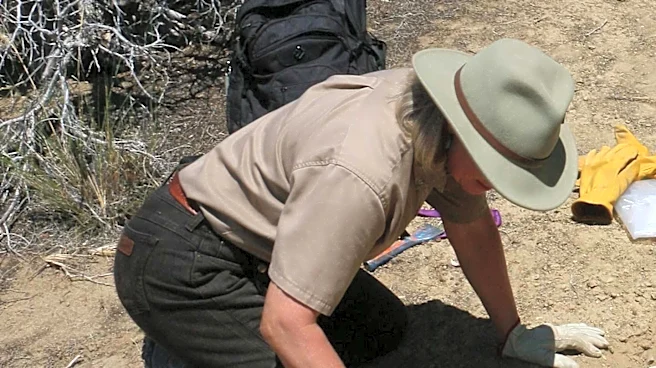
Paleontologists from the New Mexico Museum of Natural History and Science have announced the discovery of a new dinosaur species, Dinevenator robustus, in San Juan County. The species, identified from a skull fragment found in 2005, is believed to be a large
troodontid, measuring 8 to 10 feet in length and weighing 150 to 300 pounds. The discovery highlights the significance of New Mexico's fossil deposits, which have been under-researched compared to other North American sites. The name Dinevenator robustus reflects the dinosaur's robust build and honors the Diné people, acknowledging the historical significance of the land.
Why It's Important?
The discovery of Dinevenator robustus contributes to the understanding of dinosaur diversity during the Late Cretaceous Period. It underscores the potential of New Mexico's fossil sites to provide insights into prehistoric life and the evolutionary history of dinosaurs. This finding may attract further scientific interest and research funding to the region, enhancing its status in global paleontological studies. Additionally, it highlights the importance of preserving fossil sites for future discoveries that can reshape scientific narratives.
What's Next?
Further excavation and research in the De-na-zin Member of the Kirtland Formation may uncover additional fossils, providing more comprehensive data on the Dinevenator robustus and other species. The discovery could lead to increased collaboration between paleontologists and local communities, fostering educational opportunities and tourism. Continued research may also refine the understanding of troodontid evolution and their ecological roles during the Cretaceous Period.