






What's Happening?
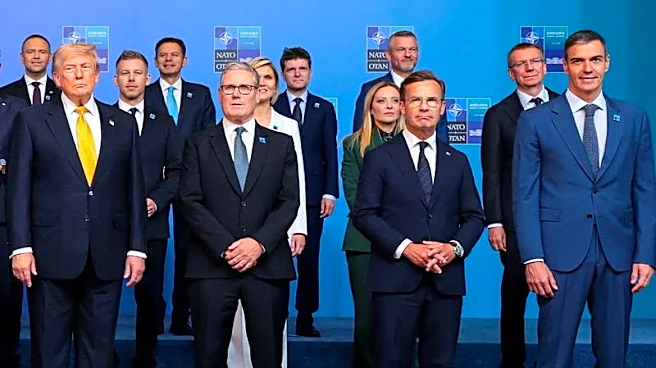
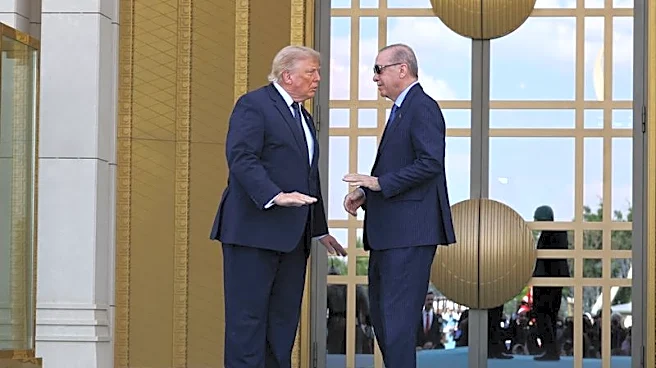
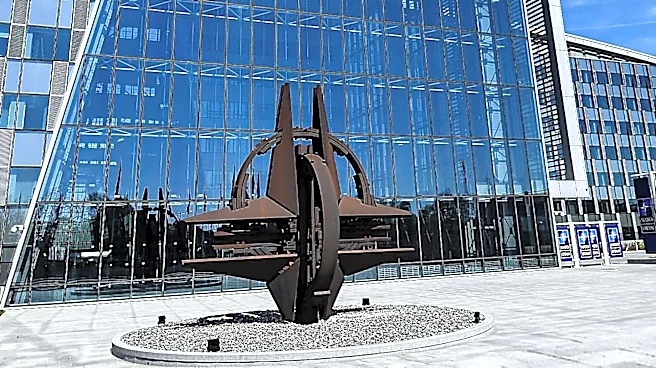
President Donald Trump has lifted sanctions on Turkey, potentially allowing the sale of F-35 stealth fighter jets to the country. This decision follows a warm reception at the NATO summit in Turkey. The sanctions were initially imposed during Trump's
first term after Turkey acquired Russian S-400 missile systems, which the U.S. opposed. A congressional ban currently prevents the transfer of F-35s to Turkey unless it no longer possesses the Russian systems. Concerns have been raised by a bipartisan group of Congress members and Israeli Prime Minister Benjamin Netanyahu, who argue that the sale could destabilize the Middle East and threaten U.S. and Israeli security.
Why It's Important?
The potential sale of F-35 jets to Turkey could significantly alter the balance of power in the Middle East. The F-35 is a highly advanced combat aircraft, and its acquisition by Turkey, a NATO member with close ties to Russia and China, could pose security risks to U.S. and Israeli interests. The decision also highlights the complexities of U.S.-Turkey relations, as Turkey's alignment with adversaries like Russia has been a point of contention within NATO. The move could lead to further geopolitical tensions and impact U.S. foreign policy in the region.
What's Next?
The lifting of sanctions and potential F-35 sales will likely prompt further debate within the U.S. government and among international allies. Congress may seek to reimpose sanctions or block the sale to prevent potential security threats. The response from Turkey and its actions regarding the Russian missile systems will be closely monitored. Additionally, the decision could influence future U.S. relations with NATO allies and impact the strategic dynamics in the Middle East.