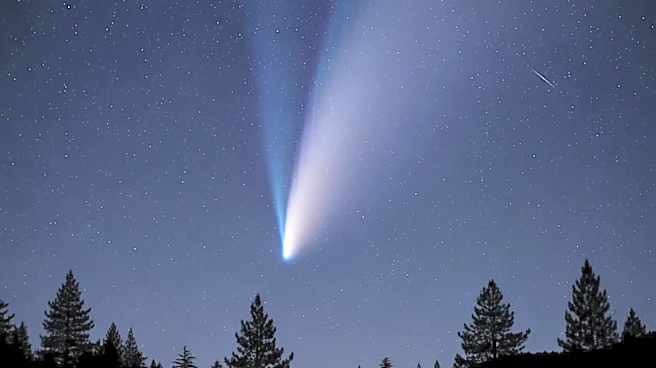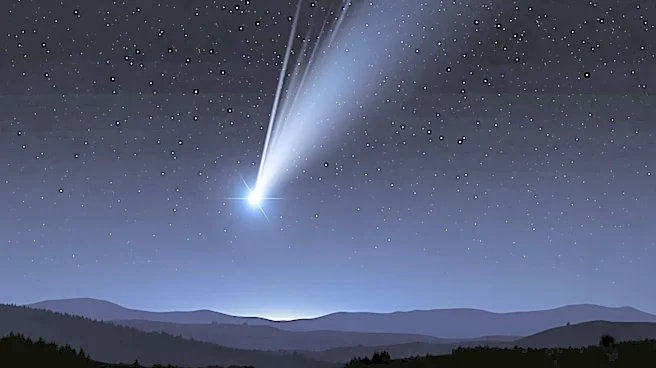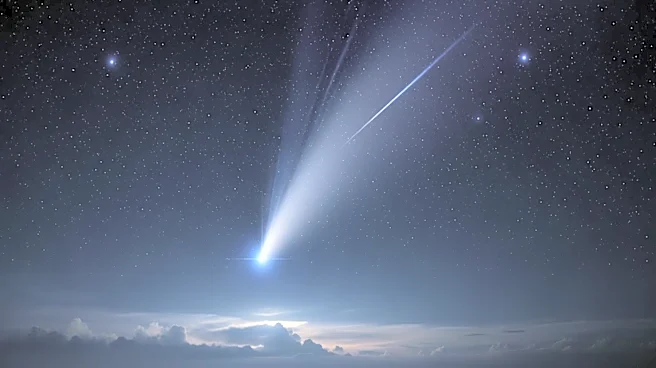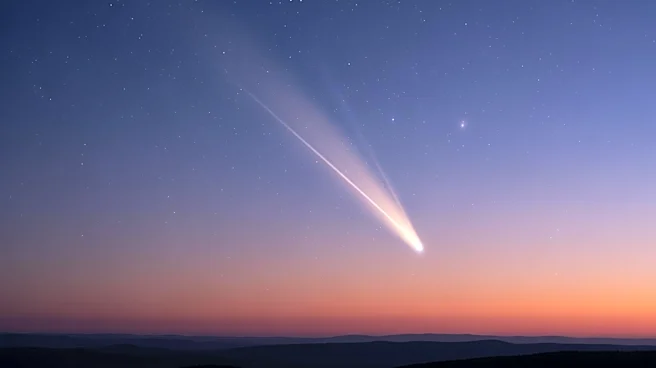





What's Happening?
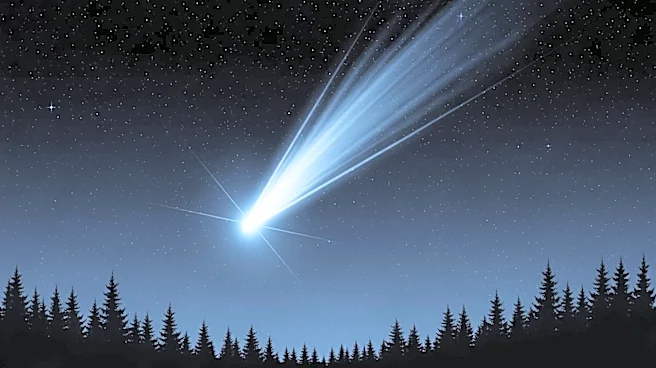
Comet C/2025 R3 (Pan-STARRS) is currently making its way through the inner solar system, with its closest approach to the sun expected on April 19 and 20, followed by its nearest pass to Earth on April 26 and 27. Discovered in 2025 by the Pan-STARRS telescope
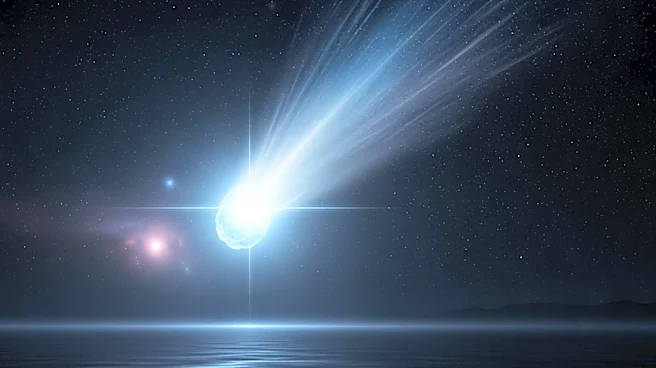
in Hawaii, this comet is notable for its rare visibility to the naked eye from dark-sky locations. Observers are advised to look towards the eastern or northeastern horizon in the early morning hours before sunrise for the best chance of spotting it. The comet, which has an orbital period of approximately 170,000 years, will come within about 44 million miles of Earth. Its greenish coma and faint tail make it a striking sight, and astronomers recommend using binoculars or a small telescope to enhance the viewing experience.
Why It's Important?
The appearance of Comet C/2025 R3 offers a unique opportunity for both amateur and professional astronomers to observe a celestial event that occurs once every 170,000 years. This event not only provides a chance for scientific study but also serves to engage the public in astronomy and space science. The visibility of such a rare comet can inspire interest in space exploration and education, potentially influencing future generations of scientists and astronomers. Additionally, the event highlights the capabilities of modern telescopes and observational technology in discovering and tracking celestial bodies.
What's Next?
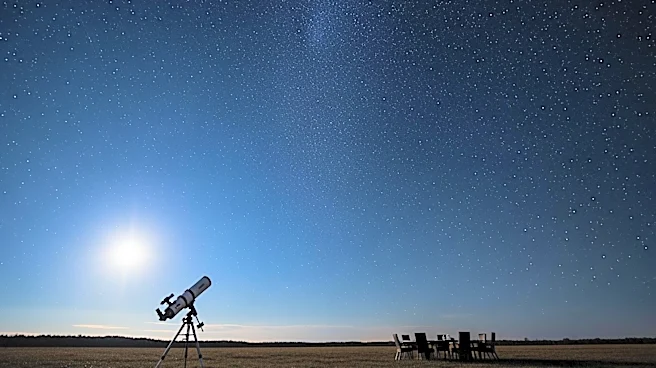
As the comet approaches its peak brightness, skywatchers are encouraged to prepare for optimal viewing conditions by finding dark-sky locations and using appropriate equipment like binoculars or small telescopes. Astronomical societies and observatories may organize public viewing events to facilitate community engagement and education. The scientific community will likely continue to monitor the comet's trajectory and characteristics, contributing valuable data to the study of cometary behavior and composition.