





What's Happening?
Francisco “Kiko” Trujillo, an industrial engineer from Nogales, Mexico, has dedicated his life to empowering people with disabilities through the Arizona Sonora Border Projects for Inclusion (ARSOBO). This non-profit organization, co-founded with Dr.
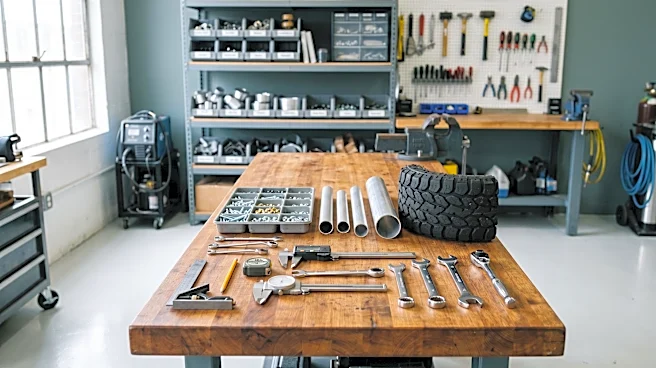
Burris “Duke” Duncan, a pediatrician from Tucson, Arizona, provides essential mobility devices and rehabilitation services to low-income families in both Mexico and the U.S. Trujillo's journey began in 2008 when Dr. Duncan sought a partner to provide all-terrain wheelchairs. Despite Trujillo's initial lack of medical equipment knowledge, his deep community roots and personal connection—his brother was born with a congenital condition—drove him to embrace this mission. ARSOBO not only fabricates custom wheelchairs, orthotics, and prosthetics but also distributes hearing aids and offers free physical therapy. A unique aspect of ARSOBO is its hiring policy: individuals with disabilities are employed to build devices for others with similar conditions, fostering empathy and empowerment among patients. To date, ARSOBO has served nearly 3,500 people from various regions, constructing over 820 all-terrain wheelchairs, fabricating 900 orthotics and prosthetics, and distributing more than 740 hearing aids.
Why It's Important?
ARSOBO's work is critically important for addressing significant healthcare disparities along the U.S.-Mexico border, particularly concerning access to mobility devices and rehabilitation services. In Mexico, public health programs often do not cover prosthetics and orthotics, leaving many individuals with disabilities without necessary support. ARSOBO fills this void by providing these life-changing devices, enabling recipients to regain independence, seek employment, and improve their overall quality of life. The organization's model of employing individuals with disabilities to create devices for others is transformative; it not only provides employment opportunities but also offers a powerful message of hope and capability to new patients. This approach fosters a supportive community where shared experiences lead to greater understanding and motivation. Furthermore, ARSOBO's collaboration with manufacturers, companies, and universities helps offset costs and brings medical expertise and training across the border, strengthening cross-border relations and healthcare infrastructure. The long-term impact extends beyond individual patients, as empowered individuals can contribute more actively to their families and communities, reducing the economic and social burden of disability.
What's Next?
ARSOBO is expected to continue expanding its reach and services, building on its success in providing mobility devices and rehabilitation. The organization's partnerships with universities, such as the University of Arizona’s Speech, Language and Hearing Sciences Department, suggest ongoing efforts to integrate specialized medical services and training. As ARSOBO recently moved to a larger facility, it is likely to increase its capacity for fabricating devices and offering physical therapy, potentially serving more individuals from a wider geographic area. The model of employing individuals with disabilities to build devices is a sustainable and empowering approach that could be replicated in other regions facing similar challenges. Continued fundraising and collaborations with manufacturers will be crucial for maintaining the affordability and accessibility of their services. The organization's commitment to ensuring that 'nobody walks out of here without what they need' indicates a sustained effort to meet the diverse needs of the disabled community along the border.
Beyond the Headlines
Beyond the immediate provision of medical devices, ARSOBO's work highlights profound ethical and cultural dimensions of disability and cross-border cooperation. The organization challenges societal perceptions of disability by demonstrating the immense potential and contributions of individuals with disabilities, particularly through its employment practices. By hiring people with disabilities to create devices for others, ARSOBO fosters a sense of agency and purpose, transforming recipients from passive patients into active participants in their own and others' recovery. This approach also underscores the human element in healthcare, emphasizing empathy and shared experience as critical components of healing and empowerment. Culturally, ARSOBO bridges divides between the U.S. and Mexico, demonstrating how collaborative efforts can address shared humanitarian challenges that transcend national borders. The initiative serves as a powerful example of how grassroots efforts, driven by personal commitment and community engagement, can create lasting social change and improve the lives of vulnerable populations, fostering dignity and self-reliance in the face of adversity.