





What's Happening?
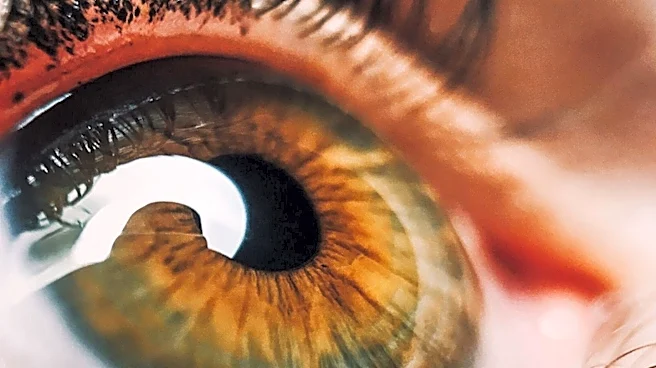
Recent research from Lund University and the University of Sussex suggests that the earliest ancestor of vertebrates, including humans, may have passed through a cyclops-like stage nearly 600 million years ago. This tiny creature, with a single eye on top
of its head, is believed to have contributed to the development of the paired eyes used by vertebrates today. The study proposes that part of this ancient visual system survives in modern brains as the pineal gland, which helps regulate sleep. The findings challenge previous understandings of eye evolution and suggest a unique evolutionary path for vertebrate eyes.
Why It's Important?
The study provides new insights into the evolution of vertebrate eyes, highlighting a unique evolutionary detour that distinguishes them from the eyes of other animals like insects and squid. Understanding the origins of the vertebrate visual system can inform broader studies of evolutionary biology and the development of sensory organs. The research also underscores the complexity of evolutionary processes and the diverse paths life can take. By tracing the origins of human eyes, scientists can better understand the evolutionary pressures and adaptations that have shaped the development of complex life forms.
Beyond the Headlines
The research suggests that the pineal gland, a small organ in the brain, may be a remnant of the ancient median eye. This connection between ancient and modern visual systems highlights the intricate links between evolution and physiology. The study also raises questions about the role of evolutionary history in shaping current biological functions and the potential for other ancient traits to persist in modern organisms. By exploring these connections, scientists can gain a deeper understanding of the continuity and change in evolutionary processes.