








What's Happening?
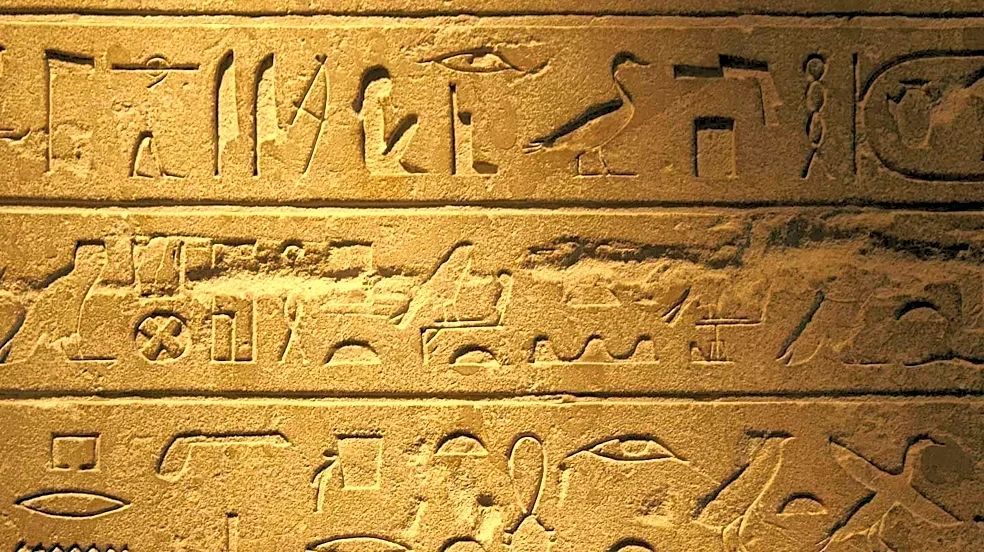
The Rosetta Stone, a granodiorite stele discovered in 1799 in Egypt, is a pivotal artifact in the understanding of ancient Egyptian civilization. This stone features the same text inscribed in three different scripts: Ancient Greek, Demotic, and hieroglyphic.
Its trilingual inscription proved instrumental in deciphering Egyptian hieroglyphs, a language that had been lost to scholars for centuries. The stone is currently a prominent exhibit at the British Museum in London, where it is part of a broader collection of significant historical artifacts. The presence of the same decree in three scripts allowed linguists and historians to cross-reference and understand the previously undecipherable hieroglyphs, unlocking vast amounts of information about ancient Egyptian culture, history, and administration. The stone's discovery marked a turning point in Egyptology, providing the key to understanding a rich and complex civilization.
Why It's Important?
The Rosetta Stone's importance cannot be overstated in the fields of history, linguistics, and archaeology. Its decipherment provided the foundational knowledge necessary to read countless other ancient Egyptian texts, from monumental inscriptions to papyrus scrolls. This breakthrough allowed modern scholars to gain direct insight into the lives, beliefs, and political structures of ancient Egyptians, rather than relying solely on interpretations from other cultures. The ability to read hieroglyphs opened up a direct line of communication with an ancient civilization, revealing details about their pharaohs, religious practices, daily life, and scientific advancements. Without the Rosetta Stone, much of what is known about ancient Egypt would remain a mystery, making it a cornerstone of historical research and cultural understanding. Its impact extends to how we approach the study of lost languages and ancient civilizations globally.
What's Next?
While the Rosetta Stone has already fulfilled its primary role in deciphering hieroglyphs, its ongoing presence at the British Museum ensures its continued importance as an educational and cultural artifact. Future developments may involve further digital preservation efforts, advanced imaging techniques to study its inscriptions in greater detail, or new academic interpretations of the text itself. The stone continues to be a subject of study for linguists examining the nuances of ancient languages and the process of translation across different scripts. Discussions surrounding the repatriation of artifacts, including the Rosetta Stone, to their countries of origin, such as Egypt, are ongoing in the broader cultural heritage discourse. Any such move would involve significant international negotiations and could alter its accessibility and display context, though its historical significance would remain undiminished.
Beyond the Headlines
The Rosetta Stone's legacy extends beyond its linguistic utility, embodying broader themes of cultural exchange, colonial history, and the ethics of artifact ownership. Discovered during Napoleon's Egyptian campaign and later transferred to British possession under the Treaty of Alexandria, the stone's journey reflects complex historical power dynamics. Its current location in the British Museum, far from its origin, sparks ongoing debates about cultural patrimony and the rightful place of historical artifacts. This discussion highlights the tension between universal access to cultural heritage and the claims of originating nations. Furthermore, the Rosetta Stone serves as a powerful symbol of intellectual discovery and the human drive to understand the past, demonstrating how a single artifact can unlock an entire civilization's voice and reshape our understanding of human history and linguistic evolution.