



What's Happening?
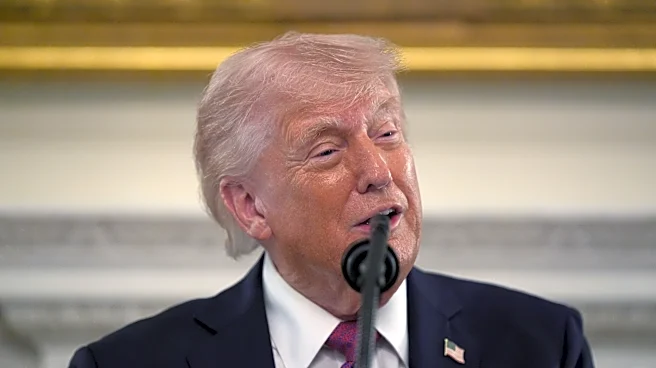
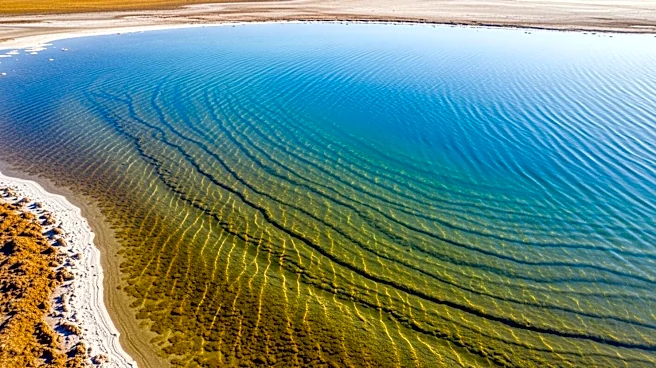
President Trump has proposed a $1 billion federal investment to restore the Great Salt Lake in Utah, which has been severely affected by water shortages and environmental degradation. The lake, once a thriving ecosystem, is now at risk due to excessive
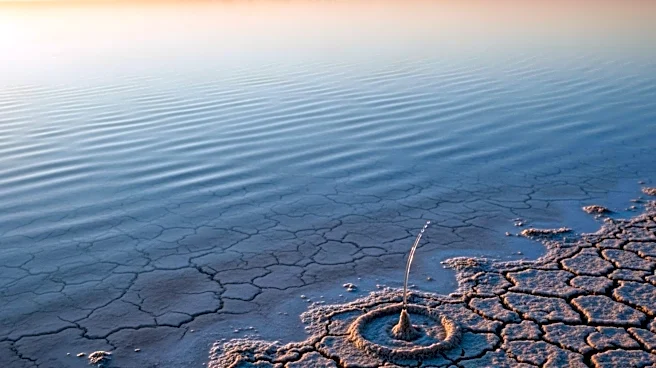
water consumption and poor snowfall. Utah's leaders, including Governor Spencer Cox, have been advocating for federal assistance to address the environmental and economic challenges posed by the lake's decline. The lake is crucial for the region's ecosystem, supporting migratory birds and providing a significant portion of the world's brine shrimp supply. The proposal comes as Utah seeks to prevent further environmental damage and health risks from toxic dust emanating from the exposed lakebed.
Why It's Important?
The restoration of the Great Salt Lake is significant for both environmental and economic reasons. The lake's decline poses health risks to millions due to toxic dust and threatens the local economy, which relies on the lake for minerals and brine shrimp. The proposed federal funding highlights the importance of addressing environmental issues that have far-reaching impacts on public health and regional economies. President Trump's involvement underscores a shift in focus towards environmental restoration projects, which could set a precedent for future federal interventions in similar ecological crises.
What's Next?
If approved, the $1 billion funding will be used to increase water flow to the lake, aiming to restore its ecological balance. The proposal will need to pass through Congress, where it may face scrutiny and debate. Utah's leaders are optimistic about securing the funding, leveraging the current political climate with a Republican president and a narrow majority in Congress. The success of this initiative could influence future environmental policies and funding allocations, particularly in regions facing similar ecological challenges.