






What's Happening?
A Colorado court has reversed the homicide convictions of two paramedics involved in the 2019 death of Elijah McClain, a Black man who died after being restrained by police and injected with ketamine. The appeals court ordered new trials for paramedics Jeremy
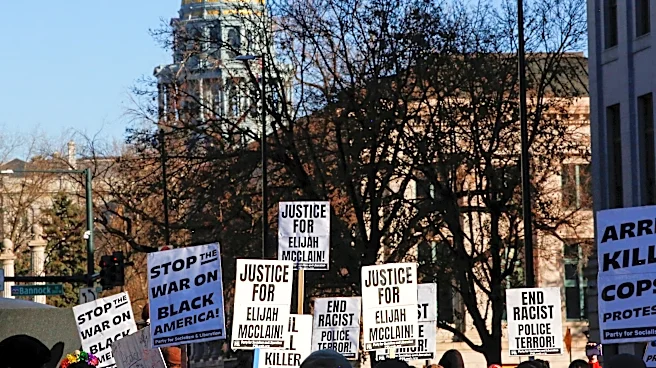
Cooper and Peter Cichuniec, citing issues with jury instructions related to the criminally negligent homicide charges. McClain's death, which occurred after a police stop in Aurora, Colorado, became a focal point for social justice movements. The case has raised questions about the use of ketamine by emergency responders and the accountability of first responders in police custody deaths.
Why It's Important?
The reversal of convictions in the Elijah McClain case is significant as it highlights ongoing debates about the use of force and accountability in law enforcement and emergency medical responses. The case has drawn national attention, reflecting broader concerns about racial justice and police practices in the U.S. The decision to grant new trials underscores the complexities of legal proceedings in cases involving police and paramedics, and it may influence future policies on the use of sedatives like ketamine. The outcome of the new trials could have implications for how first responders are trained and held accountable in similar situations.
What's Next?
The Colorado Attorney General's office plans to appeal the court's decision, indicating that the legal battle over the paramedics' actions is far from over. The new trials will bring renewed scrutiny to the case and may prompt further discussions on the use of ketamine and other sedatives in law enforcement contexts. The case will continue to be a touchstone for activists and policymakers advocating for reforms in police and emergency medical practices. The outcome of the appeals and subsequent trials will be closely watched by legal experts, civil rights advocates, and the public.