





What's Happening?
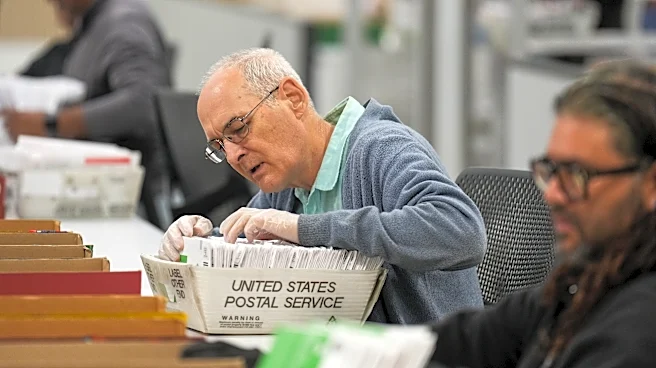
The results of California's primary elections are still pending as many races remain too close to call. The state's election process, which allows for a significant volume of mail-in ballots, has contributed to the delay in finalizing results. Key races,
including those for governor and several congressional seats, are still undecided. The top two vote-getters in each race will advance to the general election, regardless of party affiliation. The slow counting process is due to California's election laws, which permit ballots postmarked by Election Day to be counted if they arrive within seven days. This has led to a prolonged period of uncertainty as election officials work to verify and count the remaining ballots.
Why It's Important?
The delay in determining the outcomes of California's primary elections has significant implications for political strategy and voter confidence. The uncertainty can affect campaign dynamics and voter engagement, as candidates and parties may need to adjust their strategies based on evolving results. The situation also highlights the logistical challenges of managing elections in a large and diverse state, where legal requirements and the volume of mail-in ballots can impact the speed of the counting process. Additionally, the delay can contribute to public skepticism and conspiracy theories, particularly when high-profile races are involved.
What's Next?
As the counting process continues, California election officials will need to ensure transparency and accuracy to maintain public trust. The state may face calls for reforms to expedite the counting process in future elections, potentially involving changes to election laws or increased funding for election administration. Political leaders and stakeholders will likely continue to debate the balance between speed and accuracy in election results. The outcome of the primary elections will have significant implications for the general election in November, influencing political dynamics and policy priorities in the state.