






What's Happening?
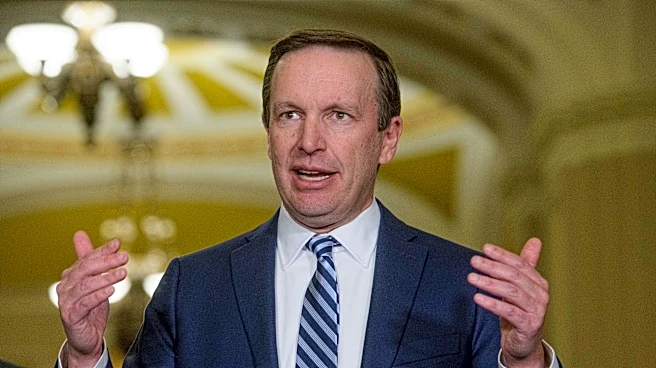
U.S. Senator Chris Murphy (D-CT), 53, was hospitalized after experiencing a stroke on Saturday. According to a statement from his chief of staff, Allison Herwitt, Senator Murphy began feeling numbness in his arm while attending his son's hockey game.
He was initially taken to a local hospital where the stroke was diagnosed, and subsequently transferred to Johns Hopkins for further monitoring and treatment. His office reported that he is awake, alert, and responding well to treatment, with doctors expressing optimism for a full recovery. Fellow Connecticut Senator Richard Blumenthal, Governor Ned Lamont, and Lieutenant Governor Susan Bysiewicz, among other officials, have expressed their support and well wishes for Senator Murphy. Senator Murphy had been actively campaigning for Democratic candidates across the country and in Connecticut prior to the incident.
Why It's Important?
The hospitalization of a sitting U.S. Senator due to a stroke highlights the critical importance of public health awareness regarding stroke symptoms and immediate medical intervention. Strokes are a leading cause of death and disability in the United States, affecting approximately 800,000 Americans annually. Medical experts, such as Dr. Kevin N. Sheth, director of the Yale Center for Brain & Mind Health, emphasize that strokes can occur at any age and that early recognition of symptoms is crucial for better outcomes. This event also underscores the demanding schedule and potential health risks faced by public officials, particularly during intense political periods like election cycles. The swift response and positive prognosis for Senator Murphy could serve as a public reminder for vigilance regarding health and the importance of preventative care.
What's Next?
Senator Murphy is currently undergoing treatment and monitoring at Johns Hopkins, with his office expressing optimism for a full recovery. While he is not up for re-election in the current cycle, his recovery process will likely involve a period of recuperation. His colleagues and other political figures have voiced their anticipation for his return to the Senate. This incident may prompt renewed discussions among lawmakers and the public about the health and well-being of elected officials, especially given the high-pressure environment of national politics. The focus will remain on his continued progress and eventual return to his duties representing Connecticut in the Senate.
Beyond the Headlines
This event brings to the forefront the broader societal impact of strokes and the need for widespread public education on recognizing their signs. The fact that a prominent public figure like Senator Murphy experienced a stroke can help destigmatize the condition and encourage more people to seek immediate medical attention if they or someone they know exhibits symptoms. It also subtly highlights the physical toll that public service can take, with Senator Murphy having recently completed a 'walk across Connecticut' and engaged in extensive campaigning. The support from across the political spectrum for Senator Murphy's recovery also demonstrates a moment of unity that transcends partisan divides in times of personal health crises.