






What's Happening?
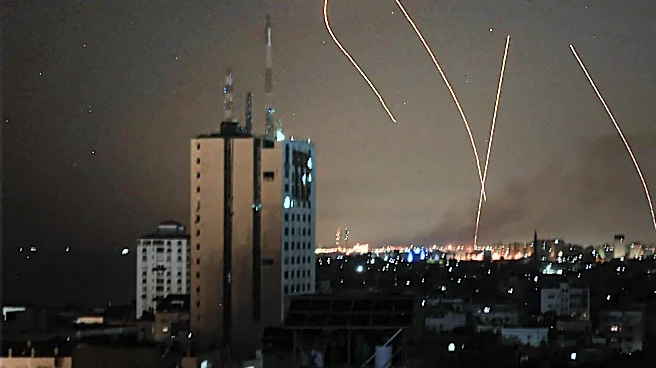
The United States military is experiencing a significant depletion in its stockpiles of Patriot and THAAD missile interceptors following recent conflicts with Iran. A report by the Center for Strategic and International Studies (CSIS) reveals that the U.S.
now has fewer than 827 Patriot and 278 THAAD interceptors, a drastic reduction from pre-conflict numbers of approximately 2,200 and 452, respectively. This depletion has raised concerns among military and congressional leaders about the U.S.'s ability to respond to threats from other nations, such as China and North Korea. The report highlights the high cost of these interceptors and the lack of viable alternatives for ballistic missile defense.
Why It's Important?
The shortage of these critical defense systems could have far-reaching implications for U.S. national security and its ability to protect its interests and allies globally. The Patriot and THAAD systems are essential for intercepting ballistic missiles, and their reduced availability may force the U.S. and its allies to take greater risks in defense strategies. This situation underscores the need for strategic planning and resource allocation to ensure military readiness. The depletion also highlights the potential impact of ongoing military engagements on the U.S.'s defense capabilities, emphasizing the importance of maintaining robust stockpiles to address multiple threats simultaneously.
What's Next?
In response to the shortage, the U.S. Department of Defense has signed agreements to increase the production of Patriot and THAAD missile components. However, replenishing these stockpiles to pre-conflict levels could take years. The Pentagon and Congress are likely to engage in discussions about funding and resource allocation to address this issue. Additionally, the U.S. military may need to adjust its defense strategies and prioritize engagements to conserve remaining resources. The situation may also prompt a reevaluation of military aid and resource distribution to allies, such as Ukraine, to balance domestic defense needs.