



What's Happening?
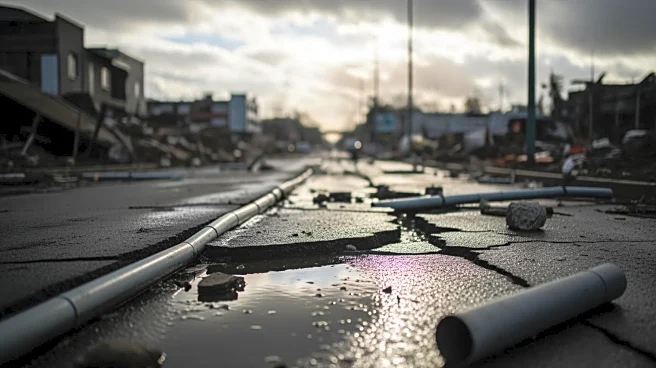
In Gaza, residents are grappling with the aftermath of severe torrential rains that have devastated the region, leading to the collapse of already damaged buildings and resulting in at least 12 fatalities, including a two-week-old infant. The heavy rainfall,
which exceeded 150 millimeters in some areas, has turned roads into mud and flooded camps for displaced individuals. The Gaza Health Ministry reported that the infant died from hypothermia, highlighting the dire conditions faced by many. The United Nations estimates that nearly 80% of Gaza's buildings have been damaged or destroyed, leaving residents with limited options for shelter. Aid groups have criticized the insufficient supply of shelter materials entering Gaza, despite a ceasefire agreement that was supposed to facilitate aid delivery.
Why It's Important?
The situation in Gaza underscores the ongoing humanitarian crisis exacerbated by environmental challenges and inadequate infrastructure. The heavy rains have highlighted the vulnerability of the region's infrastructure, which has been severely compromised by years of conflict. The lack of adequate shelter and resources poses significant risks to the health and safety of Gaza's population, particularly as winter approaches. The international community's response, including aid delivery and infrastructure support, is crucial in mitigating the impact of such natural disasters. The crisis also reflects broader geopolitical tensions, as aid delivery is often entangled with political negotiations and security concerns.
What's Next?
As the humanitarian situation in Gaza remains critical, international aid organizations and local authorities are likely to intensify efforts to provide emergency relief and improve infrastructure resilience. The United Nations and other aid groups may push for increased access to Gaza to deliver essential supplies, including winterization materials. The ongoing ceasefire between Israel and Gaza could be tested if aid delivery continues to face obstacles. Additionally, the international community may call for renewed diplomatic efforts to address the underlying political and security issues that contribute to Gaza's vulnerability.