

What's Happening?
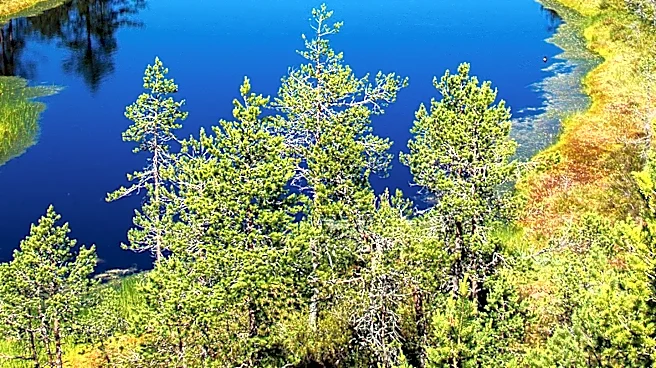
A study conducted in a boreal rich fen in Finland has examined how environmental variations, such as reindeer exclusion and snow depth manipulation, affect the soil microbiome composition and function. The research found that microbial communities differed
significantly between areas with and without reindeer, primarily due to hydrological variations. Wetter conditions inside the exclosure led to higher expression of denitrification genes, indicating a greater potential for complete denitrification. Snow depth changes had subtle effects, mainly influencing microbial interactions. The study highlights the role of hydrology and vegetation in driving microbial greenhouse gas processes in peatlands.
Why It's Important?
This research provides insights into the complex interactions between environmental factors and soil microbiomes in northern peatlands, which are critical carbon storage ecosystems. Understanding these dynamics is essential for predicting the impact of climate change on greenhouse gas emissions from peatlands. The findings could inform conservation strategies and land management practices aimed at preserving these vital ecosystems and mitigating their contribution to global warming.
Beyond the Headlines
The study underscores the importance of considering both biotic and abiotic factors in ecosystem management. The role of large herbivores, such as reindeer, in shaping soil microbial communities highlights the interconnectedness of aboveground and belowground processes. Additionally, the research suggests that changes in snow cover due to climate change could have far-reaching effects on peatland ecosystems, influencing not only microbial activity but also broader ecological functions.