



What's Happening?
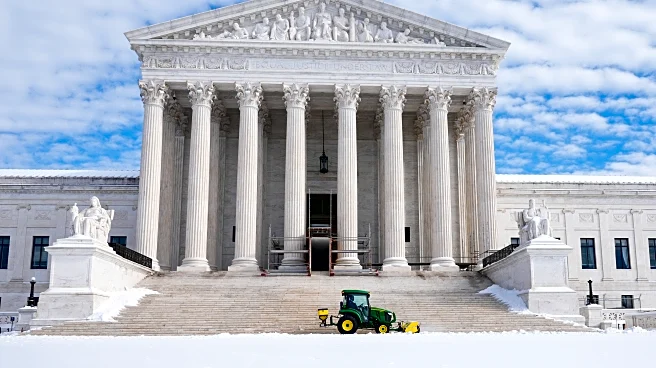
The Trump administration's use of tariffs under the International Emergency Economic Powers Act (IEEPA) is under review by the U.S. Supreme Court. The case, Learning Resources, Inc. v. Trump, will determine the extent of presidential power to impose broad
tariffs under emergency powers. Meanwhile, the administration continues to utilize established tariff authorities, such as Section 232 and Section 301, to impose duties on specific sectors and products. These sections allow for tariffs based on national security and unfair trade practices, respectively. The administration's reliance on these tools underscores its commitment to using tariffs as a key component of trade policy, despite the pending legal challenge.
Why It's Important?
The Supreme Court's decision could redefine the limits of presidential authority in trade matters, potentially impacting future administrations' ability to impose tariffs unilaterally. A ruling that restricts IEEPA could lead to a shift towards more traditional tariff mechanisms, affecting industries reliant on international trade. Importers must navigate complex tariff classifications under the Harmonized Tariff Schedule of the United States (HTSUS) to manage costs and compliance risks. The outcome of this case will have significant implications for U.S. trade policy, international relations, and the balance of power between the executive and legislative branches.
What's Next?
The Supreme Court's ruling will be pivotal in shaping the future of U.S. trade policy and the administration's ability to leverage tariffs as a strategic tool. Depending on the decision, there may be increased reliance on Sections 232 and 301, prompting industries to adjust their compliance strategies. Importers will need to focus on accurate product classification to mitigate tariff impacts. The decision could also influence legislative efforts to clarify or limit presidential tariff powers, potentially leading to new trade policy frameworks. Stakeholders will be closely watching for the ruling and its implications for international trade dynamics.