






What's Happening?
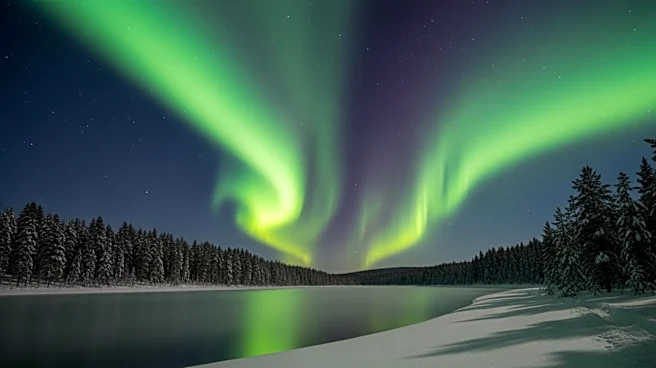
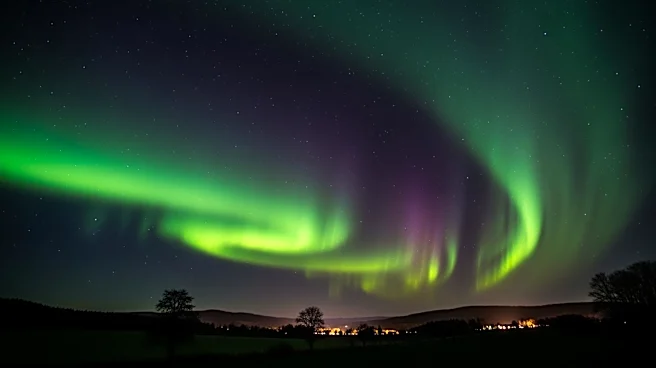
A surge of solar wind is set to trigger geomagnetic storms, making the Northern Lights visible as far south as Illinois and Oregon. This rare event, predicted by NOAA, could dazzle millions of skywatchers across the U.S. The geomagnetic storms are expected
to reach moderate intensity, with potential for stronger bursts if solar wind intensifies. The auroras are anticipated to be most visible between 5 p.m. EDT on April 17 and 2 a.m. EDT on April 18. Experts recommend finding locations with minimal light pollution and using cameras with long exposure to capture the faintest colors.
Why It's Important?
This event marks a rare opportunity for residents in mid-latitude regions to witness the aurora borealis, typically confined to polar areas. The geomagnetic storms could impact technological systems, including communication and navigation technologies. The widespread visibility of the auroras may increase public interest in space weather phenomena and encourage scientific engagement. Additionally, the event highlights the dynamic nature of solar activity and its potential effects on Earth's magnetic field and atmosphere.
What's Next?
NOAA will continue to monitor the geomagnetic storm and provide updates on aurora visibility. Stargazers are encouraged to plan their viewing locations and times to maximize their chances of seeing the auroras. The event may lead to increased public interest in space weather and its impacts, potentially driving educational initiatives and scientific research. As the solar wind continues to interact with Earth's magnetic field, further studies may explore the long-term effects of such geomagnetic events.