






What's Happening?
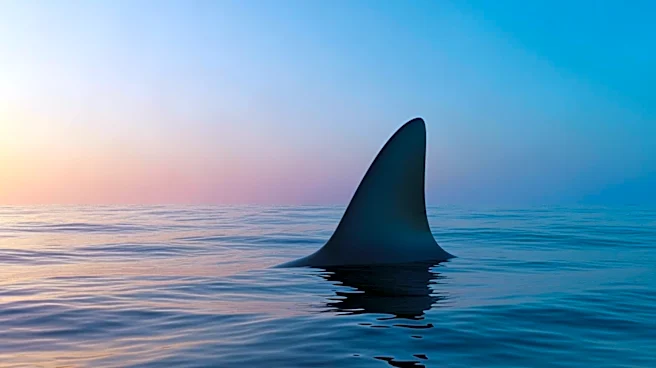
A recent study conducted by scientists at Trinity College Dublin and the University of Pretoria has revealed that certain warm-bodied fish, such as tunas and some sharks, are at risk of overheating due to rising ocean temperatures. These species, which
include the Great White and basking sharks, use significantly more energy than cold-blooded fish of similar size. The study highlights the unique challenges faced by 'mesothermic' fish, which can retain body heat, allowing them to swim faster and hunt more effectively. However, as ocean temperatures increase, these fish may be forced to migrate to cooler regions, potentially shrinking their habitable range. The research utilized biologging data to estimate metabolic rates, revealing that these fish use about 3.8 times more energy than their cold-blooded counterparts.
Why It's Important?
The findings underscore the vulnerability of these marine predators to climate change, as their high energy demands make them particularly susceptible to environmental stressors. As ocean temperatures continue to rise, the habitats of these species are expected to shrink, potentially leading to shifts in marine ecosystems. This could have significant implications for biodiversity and the balance of marine food webs. The study also highlights the potential for increased competition for food resources, as these predators may struggle to find sufficient prey in warmer waters. Understanding these dynamics is crucial for predicting the future of marine ecosystems and developing strategies to mitigate the impacts of climate change on ocean life.
What's Next?
As global temperatures continue to rise, the researchers anticipate that suitable habitats for large mesothermic fish will become increasingly limited. This may force these species to adapt by altering their behavior or physiology, such as diving deeper to find cooler waters. However, these adaptations may not be sufficient if surface temperatures continue to increase. The study calls for further research to better understand the physiological limits of these species and to inform conservation efforts aimed at protecting vulnerable marine ecosystems.