
What's Happening?
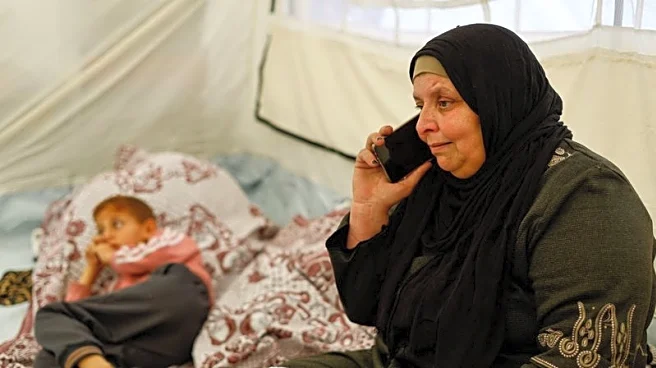
Israel is set to review reports that its troops killed a three-year-old girl, Ahed Tareq al-Bayouk, in Gaza. The incident reportedly occurred near her family's tent in Mawasi, Rafah, southern Gaza. The Israel Defense Forces stated they were not aware
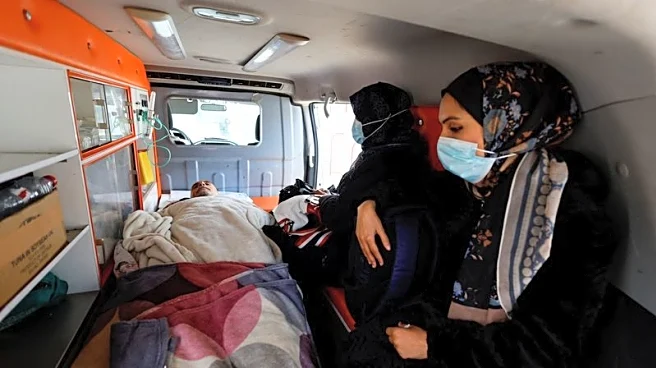
of a strike but would conduct an additional review as more information becomes available. This event took place on the Palestinian side of the Yellow Line, behind which Israeli troops agreed to withdraw as part of the first phase of a U.S.-led plan to end fighting in the region. Since the ceasefire in October, at least 370 people have been killed in Gaza, including 140 children, according to Amnesty International. The World Health Organization reports that 16,500 wounded or seriously ill Palestinians require urgent evacuation for medical treatment outside Gaza.
Why It's Important?
The review of this incident is significant as it highlights ongoing tensions and humanitarian concerns in Gaza despite the ceasefire. The death of a child underscores the fragile nature of peace efforts and the human cost of the conflict. The situation in Gaza remains dire, with thousands needing medical evacuation, reflecting the broader humanitarian crisis. The international community, including organizations like Amnesty International and the World Health Organization, continues to monitor the situation closely. The incident may impact diplomatic relations and peace negotiations, particularly as the U.S. plan progresses towards phase two, which involves establishing an interim governing authority in Gaza and disarming Hamas.
What's Next?
The next steps involve advancing the second phase of the U.S. plan, which includes deploying an international security force and Israel's eventual withdrawal from Gaza. The plan aims to create a pathway to Palestinian self-determination and statehood. Israeli Prime Minister Benjamin Netanyahu is expected to discuss the plan's next phase with President Trump in the U.S. on December 29. The return of the remains of Israeli police officer Ran Gvili is a condition for advancing the plan. The international community, including Qatar, the U.S., Turkey, and Egypt, is working to push the plan forward.
Beyond the Headlines
The broader implications of this incident and the ongoing conflict in Gaza include ethical and legal dimensions concerning the conduct of military operations and the protection of civilians. The humanitarian crisis raises questions about international law and the responsibilities of occupying forces. The situation also reflects long-term geopolitical shifts in the Middle East, as peace efforts aim to reshape regional dynamics and address longstanding issues between Israel and Palestine.