


What's Happening?
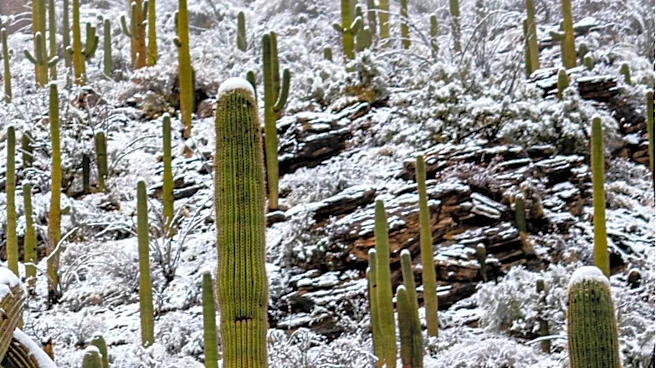
Recent storms in Tucson, Arizona, which concluded the city's 26th-wettest August on record, have led to several saguaro cacti toppling near the Phoneline #27 hiking trail in the Sabino Canyon Recreation Area. According to Coronado National Forest spokesperson
Starr Farrell, the collapse of these iconic cacti is likely weather-related. Farrell explained that saguaros absorb significant amounts of water during heavy rainfall, making them heavier and more susceptible to toppling. Despite the downed saguaros, Farrell noted that the overall impact of this year's monsoon season on Sabino Canyon has been minor, with flooding being within normal expectations for this time of year. As of September 3, Tucson has received 4.96 inches of monsoon rainfall, which is slightly above the normal average of 4.56 inches for the same period between 1991 and 2020, as reported by the National Weather Service.
Why It's Important?
The toppling of saguaros in Sabino Canyon highlights the delicate balance of desert ecosystems and their vulnerability to extreme weather events. Saguaros are a keystone species in the Sonoran Desert, providing habitat and food for numerous other species. Their loss can have cascading effects on the local ecosystem, impacting biodiversity and the overall health of the desert environment. For the Tucson community and visitors, saguaros are also significant cultural and natural landmarks, making their destruction a visible reminder of climate impacts. The increased rainfall, while beneficial in some aspects, also presents challenges for established flora not adapted to sudden weight increases. This event underscores the need for ongoing monitoring and management of natural areas to mitigate the effects of changing weather patterns.
What's Next?
With nearly a month remaining in the monsoon season, meteorologists from the National Weather Service, such as Kiera Malarkey, anticipate a good chance of additional storms in September, which could further increase total rainfall. The Climate Prediction Center forecasts above-normal precipitation for the region, suggesting that more saguaros could be at risk. Park officials and environmental groups will likely continue to monitor the stability of saguaros and assess any further damage. Efforts may be undertaken to clear fallen cacti from trails for safety and to prevent further ecological disruption. Long-term strategies for managing desert ecosystems in the face of changing climate patterns, including potential increases in heavy rainfall events, may also be considered to protect these iconic plants.
Beyond the Headlines
The incident in Sabino Canyon points to broader ecological implications of climate change, where even seemingly beneficial events like increased rainfall can have detrimental effects on specific species. While saguaros are adapted to arid conditions, sudden and heavy water absorption can exceed their structural limits, leading to their collapse. This phenomenon illustrates the complex and often unpredictable ways ecosystems respond to shifts in climate. It also raises questions about the resilience of long-lived desert flora in the face of more frequent or intense weather events. The loss of mature saguaros, which can take decades to grow, represents a significant ecological setback and a visible symbol of environmental stress in a region already grappling with water scarcity and extreme temperatures.