




What's Happening?
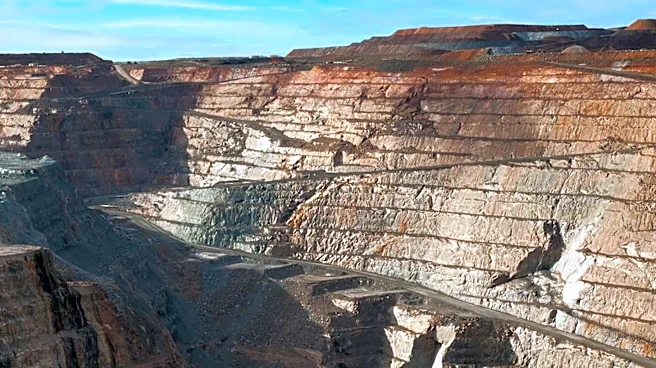
Residents of Wrightwood, California, are actively opposing a large-scale quarry project planned for Lone Pine Canyon, near Mt. Baldy. The project, which involves extracting ultra-high purity calcium carbonate by blasting down 1,600 feet across open pits
on 420 acres, received a key approval in 2019 when the San Bernardino County Planning Commission granted 'vested rights' to the quarry. This decision exempted the project from a comprehensive environmental review, following only two public meetings where minimal public input was recorded. Residents claim they were largely unaware of these plans until recently, leading to the formation of the Lone Pine Canyon Protection Alliance. This nonprofit has petitioned for a reconsideration of the Planning Commission’s decision, citing concerns about toxic dust, water table pollution, and potential impacts on wildfire evacuation routes. State wildlife officials have also raised concerns regarding the project's effect on local wildlife, including bumblebees, desert bighorn sheep, and golden eagles.
Why It's Important?
This situation highlights significant issues regarding transparency, public participation, and environmental protection in land-use planning. The granting of 'vested rights' without widespread public knowledge or a comprehensive environmental review raises questions about the fairness and adequacy of the approval process. For the residents of Wrightwood, the quarry poses direct threats to their health, safety, and quality of life, including potential air and water pollution, and exacerbating challenges during wildfire evacuations. The involvement of state wildlife officials underscores the broader ecological concerns, particularly the impact on critical wildlife corridors. This case also brings to light the power dynamics between local communities, developers, and county planning bodies, and the challenges residents face in retroactively challenging decisions made years prior. The outcome could set a precedent for how future industrial projects are approved and how community concerns are integrated into environmental assessments.
What's Next?
The Lone Pine Canyon Protection Alliance, along with three residents, has filed a petition in court requesting the county to reconsider the decision to grant vested mining rights, arguing that mining had been dormant on the property for years before 1976, which they contend is insufficient under state law for vested interest. They also claim inadequate public notice for the 2019 Planning Commission hearings. An initial court hearing is scheduled for January 19. The county has declined to comment on the pending litigation. The quarry owner had requested a postponement for the reclamation plan review, and a new date has not yet been set. Major stakeholders, including Rep. Judy Chu (D-Monterey Park) and state Sen. Suzette Martinez Valladares (R-Acton), have expressed support for more scrutiny of the quarry. The community's continued activism and the legal proceedings will determine whether the project proceeds as planned or if a full environmental review will be mandated.
Beyond the Headlines
This conflict extends beyond a single quarry project, touching upon fundamental questions of democratic process and environmental justice. The residents' struggle against a project approved years ago without their knowledge reflects a broader challenge faced by many communities where industrial developments are pushed through with limited public engagement. The concept of 'vested rights' itself, and its application in this context, raises legal and ethical questions about the balance between property rights and community well-being. Furthermore, the potential impact on wildfire evacuation routes in a region prone to such disasters adds a critical layer of public safety concern, highlighting the need for integrated planning that considers all potential risks. This case could influence future legislation regarding public notification requirements for land-use decisions and the scope of environmental reviews for long-dormant industrial sites, emphasizing the importance of ongoing community oversight and accountability.