



What's Happening?
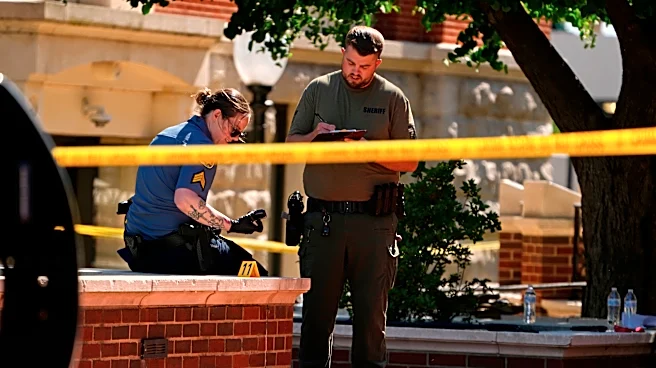
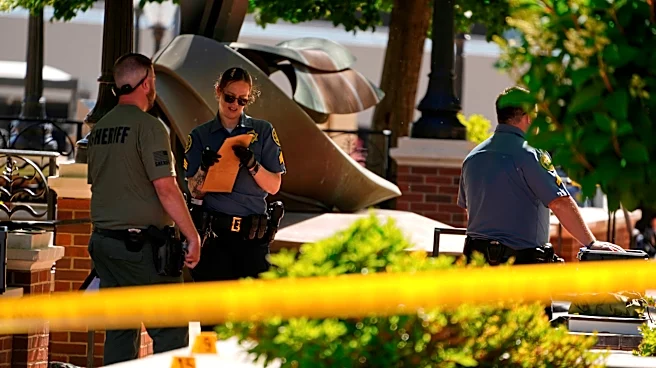
Dalton Eatherly, known online as 'Chud the Builder,' is being held on a $1.25 million bond following a shooting incident outside the Montgomery County Courthouse in Clarksville, Tennessee. Eatherly, 28, was involved in a physical altercation that escalated
to gunfire, resulting in both him and another man sustaining gunshot wounds. The Montgomery County Sheriff's Office reported that Eatherly was charged with attempted murder, employing a firearm during a dangerous felony, aggravated assault, and reckless endangerment with a deadly weapon. During his arraignment, Judge Reid Poland III emphasized the need to protect public safety due to the severity of the charges. Eatherly, who has gained notoriety for livestreaming confrontations with Black individuals, has a pending case in Davidson County. His next bond hearing is scheduled for May 21, with a preliminary hearing set for May 26.
Why It's Important?
The incident involving Dalton Eatherly highlights ongoing concerns about gun violence and public safety, particularly in public spaces like courthouses. The case also underscores the challenges law enforcement and the judicial system face in addressing individuals who use social media platforms to incite or document confrontational behavior. Eatherly's actions and subsequent legal troubles may prompt discussions on the responsibilities of social media platforms in moderating content that could lead to real-world violence. Additionally, the case raises questions about the legal system's ability to balance constitutional rights with public safety, especially when dealing with individuals who have a history of provocative behavior.
What's Next?
Eatherly's legal proceedings will continue with a bond hearing on May 21 and a preliminary hearing on May 26. The court will likely consider the implications of his social media activities and previous legal issues in determining his future. The outcome of these hearings could influence how similar cases are handled in the future, particularly those involving individuals who use social media to document or incite confrontational behavior. Stakeholders, including legal experts and civil rights advocates, may weigh in on the broader implications of this case for public safety and free speech.