




What's Happening?
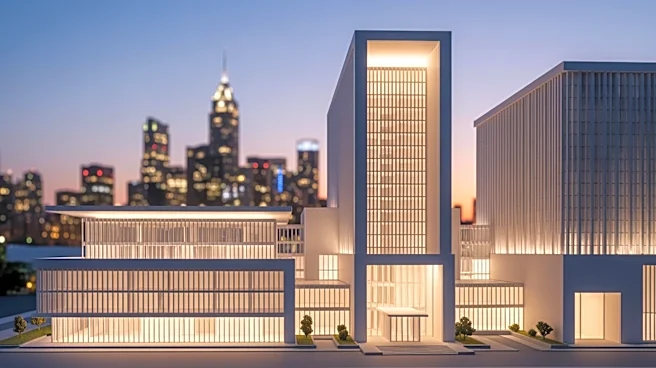
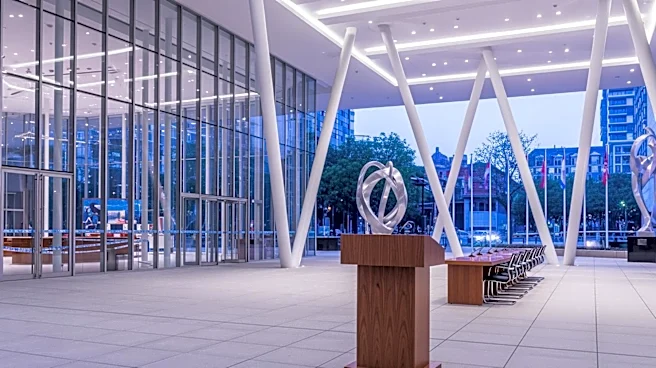
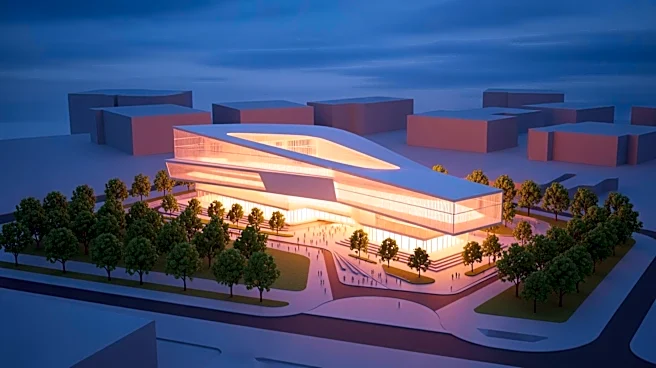
The Obama Presidential Center is set to open on June 19 in Chicago's Jackson Park, marking a significant development in the city's cultural and economic landscape. The center, spanning 19.3 acres, has been developed through extensive private fundraising
and public engagement. It is designed to function as a library, museum, convening space, and public park, expected to attract hundreds of thousands of visitors annually and generate substantial economic activity. This project is part of a broader trend where presidential centers evolve beyond archival purposes to become philanthropic institutions that influence how history is funded, interpreted, and remembered. The center's development has sparked discussions about its potential impact on local communities, particularly regarding economic opportunities and the risk of displacement.
Why It's Important?
The opening of the Obama Presidential Center is significant as it represents a shift in how presidential legacies are institutionalized in the U.S. These centers are increasingly becoming active civic institutions that shape public discourse and community engagement. The center is expected to bring economic benefits to Chicago's South Side, offering jobs and attracting tourism. However, it also raises concerns about equitable distribution of these benefits and the potential for gentrification. The philanthropic model driving such projects highlights the growing role of private capital in shaping public history and civic spaces, influencing how presidential legacies are constructed and perceived.
What's Next?
As the Obama Presidential Center opens, it will be crucial to monitor its impact on the local community and economy. Stakeholders, including local residents, civic leaders, and philanthropic organizations, will need to address concerns about displacement and ensure that the center's benefits are equitably distributed. The center's success will depend on its ability to remain connected to the community and fulfill its promises of economic and cultural revitalization. This development also sets a precedent for future presidential centers, emphasizing the need for sustainable and inclusive growth models.
Beyond the Headlines
The Obama Presidential Center's development underscores the evolving role of philanthropy in shaping civic institutions. As these centers become more ambitious in scope, they challenge traditional notions of historical preservation and public engagement. The center's impact on Chicago's South Side will serve as a case study for how large-scale philanthropic projects can influence urban development and community dynamics. This shift also raises questions about the balance between private influence and public interest in preserving and interpreting presidential legacies.