





What's Happening?
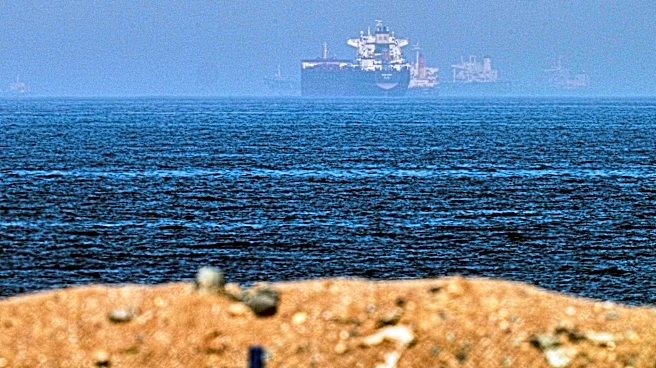
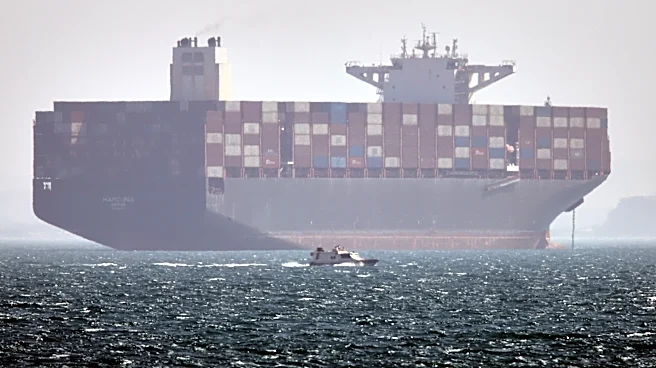
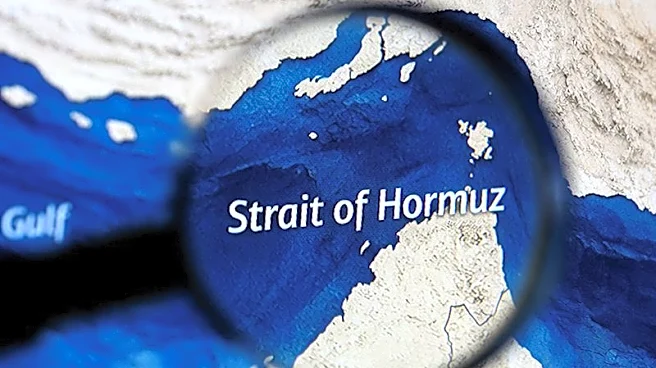
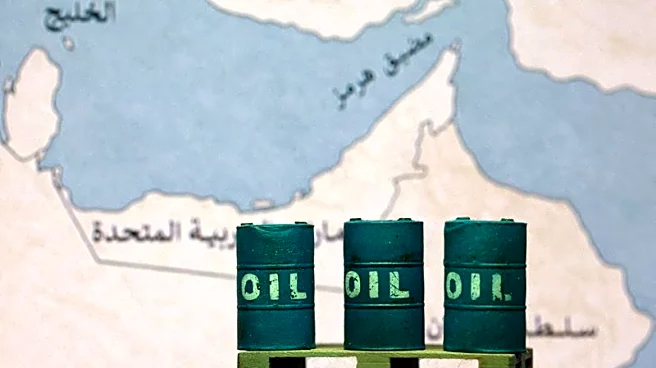
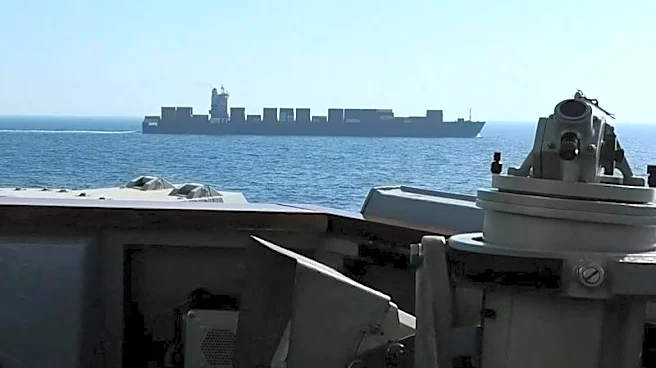
The ongoing closure of the Strait of Hormuz, following a conflict involving the U.S. and Israel against Iran, has led to a significant depletion of oil inventories among major consuming countries. Analysts, including Frederic Lasserre from Gunvor Group
and experts from JPMorgan, warn that if the closure persists, oil markets could face severe shortages, hitting 'tank bottoms' where stockpiles are exhausted. This situation is exacerbated by Iran's inability to export oil due to a U.S. naval blockade, leading to increased domestic storage levels. Iran is attempting to manage this by reducing crude output and utilizing old tankers for storage. Meanwhile, oil futures have not yet reached extreme price levels, but the potential for drastic price increases looms if the situation continues.
Why It's Important?
The closure of the Strait of Hormuz, a critical chokepoint for global oil transportation, poses a significant threat to the stability of oil markets. The depletion of oil reserves could lead to exponential price increases, impacting economies worldwide. The U.S., along with other major economies, has been releasing strategic reserves to cushion the impact, but these measures may not suffice if the closure persists. The situation highlights the vulnerability of global oil supply chains and the potential for geopolitical conflicts to disrupt energy markets. The U.S. oil industry faces uncertainty, with producers hesitant to increase output despite high prices, due to concerns about long-term market stability.
What's Next?
If the Strait of Hormuz remains closed, oil markets could face severe disruptions, with potential long-term damage to oil production capacities in Gulf states like Kuwait and Iraq. The U.S. and other countries may need to continue or increase strategic reserve releases to stabilize markets. The situation could prompt a reevaluation of global energy strategies, emphasizing the need for alternative routes and energy sources. Stakeholders, including governments and oil companies, will likely monitor developments closely, with potential diplomatic efforts to resolve the conflict and reopen the strait.
Beyond the Headlines
The current crisis underscores the geopolitical risks inherent in global energy markets and the need for diversified energy sources. It also highlights the strategic importance of the Strait of Hormuz and the potential consequences of its closure. The situation may accelerate efforts to develop alternative energy routes and increase investments in renewable energy sources to reduce dependency on oil transported through vulnerable chokepoints.