






What's Happening?
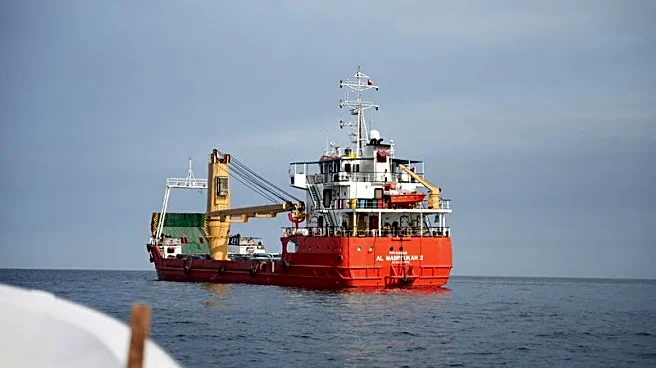
The ongoing conflict in the Middle East, particularly the closure of the Strait of Hormuz, has led to a significant shift in global oil markets. The U.S. has increased its crude exports to a record 5 million barrels per day to fill the supply gaps left
by the disruption. This situation has prompted Gulf states to explore alternative export routes, reducing reliance on the Strait. The U.S. Treasury is also considering sanctions on Chinese and Hong Kong banks that support Iran, aiming to economically isolate Iran further. The conflict has highlighted the strategic importance of diversifying energy supply routes and has potential long-term implications for global energy dynamics.
Why It's Important?
The surge in U.S. energy exports underscores America's growing role in global energy markets, potentially leading to long-term supply agreements with key partners like Japan, South Korea, and India. This shift could enhance U.S. energy dominance and reduce the strategic leverage of the Strait of Hormuz as a chokepoint. The situation also puts pressure on China, a major supporter of Iran, as the U.S. considers further economic measures. The conflict's impact on oil prices and supply chains could have significant economic implications, affecting everything from energy costs to geopolitical alliances.
What's Next?
As the conflict continues, Gulf states are likely to accelerate the development of alternative export infrastructure, potentially reducing the strategic importance of the Strait of Hormuz. The U.S. may continue to leverage its energy exports to strengthen ties with Asian partners. Additionally, the U.S. could increase diplomatic and economic pressure on China and Iran, potentially reshaping regional alliances. The outcome of these developments will depend on the conflict's duration and the effectiveness of U.S. and allied strategies in the region.