





What's Happening?
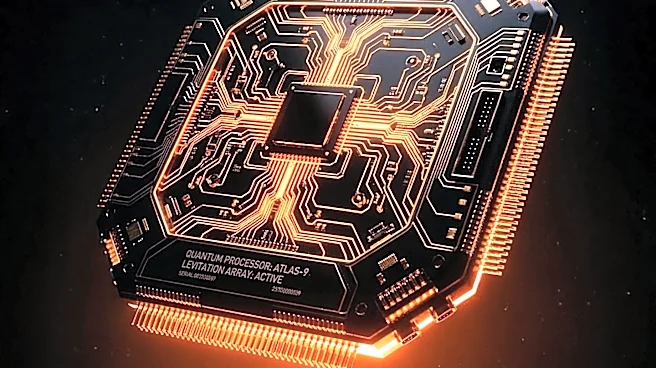
Quantinuum and Japan's RIKEN research institute have upgraded the Reimei quantum computer to Quantinuum’s System Model H2, significantly enhancing Japan's hybrid supercomputing platform. The Reimei quantum computer, now featuring 56 fully-connected high-fidelity
qubits, is integrated with RIKEN’s Fugaku classical supercomputer and the ROQUO GPU supercomputer. This advanced platform is designed to tackle complex scientific problems that are challenging for classical computers alone. The upgrade is part of the JHPC-quantum project, funded by Japan's New Energy and Industrial Technology Development Organization (NEDO). Two frontier projects are already underway, focusing on quantum materials and biomolecular chemistry, aiming to move hybrid computing beyond infrastructure demonstrations towards high-value scientific applications. This collaboration seeks to leverage the strengths of both quantum and classical computing to achieve breakthroughs in areas like material modeling and biomolecular simulations.
Why It's Important?
This advancement in hybrid quantum-classical computing is crucial for pushing the boundaries of scientific discovery. By combining the unique capabilities of quantum computers, such as handling complex quantum states and correlations, with the large-scale data processing and simulation power of classical supercomputers, researchers can address problems previously considered intractable. This integrated approach has significant implications for various fields, including drug discovery, advanced materials science, and solar energy. The ability to accurately simulate complex molecules and explore quantum magnetism at atomic levels could lead to the development of next-generation technologies, such as more efficient solar cells, novel materials for memory devices, and improved medical imaging techniques. The collaboration also sets a precedent for international partnerships in quantum technology development, potentially influencing global research and commercialization efforts.
What's Next?
Following the upgrade, the Reimei quantum computer will continue supporting two frontier projects in quantum materials and biomolecular chemistry. Once these projects conclude, Reimei will commence regular operations under the Test User Program. Quantinuum and RIKEN plan to build upon this architecture to develop a fault-tolerant 'Made with Japan' quantum computer, further solidifying Japan's long-term quantum leadership. Additionally, the partners will collaborate with SoftBank Corp. to explore connecting quantum computers directly with AI data centers in Japan, aiming to accelerate the commercial adoption of quantum-AI hybrid supercomputing. This initiative could broaden access to these advanced computing capabilities beyond the research community, making them available to industries and businesses across Japan.
Beyond the Headlines
The integration of quantum and classical computing, as demonstrated by the Reimei-Fugaku-ROQUO platform, represents a paradigm shift in computational science. This hybrid model acknowledges that neither quantum nor classical computers alone can solve all complex problems efficiently. Instead, by assigning each part of a calculation to the processor best suited for it, the system achieves scalability and addresses limitations inherent in each modality. This approach could serve as a blueprint for future supercomputing architectures globally, emphasizing collaboration between different computing technologies. Furthermore, the focus on 'Made with Japan' quantum computer development highlights a growing trend of national strategies aimed at securing technological sovereignty and fostering domestic innovation in critical emerging technologies. The ethical implications of such powerful computing capabilities, particularly in areas like drug discovery and materials science, will also become increasingly important as these technologies mature.