



What's Happening?
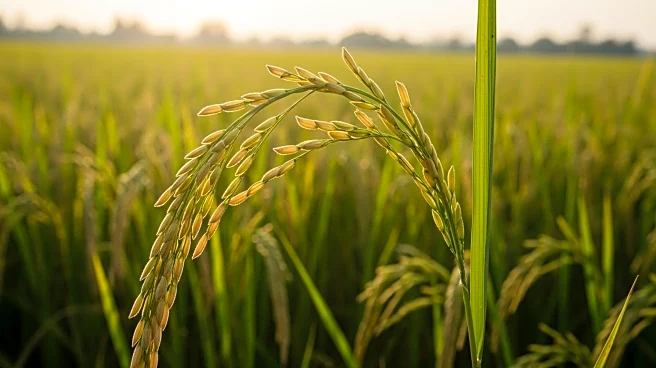
India has overtaken China to become the world's largest rice producer, achieving a total output of 150.18 million tonnes, according to Union Agriculture Minister Shivraj Singh Chouhan. This milestone was announced during an event in New Delhi where 184
new high-yielding seed varieties of 25 crops were unveiled. These developments are part of India's broader agricultural strategy to enhance crop production and increase farmers' income. The Indian Council of Agricultural Research (ICAR) has played a significant role in developing these new seed varieties, which are designed to be high-yielding and climate-resilient. The minister highlighted that since 1969, a total of 7,205 crop varieties have been notified, with a significant number approved under the current government. This achievement marks a significant shift for India, which has transformed from a food-deficient nation to a major global food provider.
Why It's Important?
India's rise as the leading rice producer has significant implications for global food security and trade. With a production surpassing China's 145.28 million tonnes, India is now positioned to play a crucial role in the international rice market. This development not only strengthens India's food security but also enhances its capacity to supply rice to overseas markets. The introduction of high-yielding and climate-resilient seed varieties is expected to further boost agricultural productivity, supporting the livelihoods of farmers and contributing to the country's economic growth. Additionally, this achievement underscores India's potential to lead in agricultural innovation and sustainability, addressing challenges such as climate change and soil salinity.
What's Next?
The Indian government is likely to focus on ensuring that these new seed varieties reach farmers quickly to maximize their impact on crop yields. There may also be increased efforts to enhance the production of pulses and oilseeds to achieve self-sufficiency in these areas. The success of these initiatives could encourage further investment in agricultural research and development, potentially leading to more breakthroughs in crop production. As India strengthens its position in the global rice market, it may also seek to expand its agricultural exports, contributing to its economic growth and international trade relations.
Beyond the Headlines
The development of climate-resilient and high-yielding seed varieties reflects a broader trend towards sustainable agriculture. These innovations are crucial in addressing the challenges posed by climate change, such as drought and soil degradation. By focusing on natural and organic farming practices, India is setting an example for other countries in balancing agricultural productivity with environmental sustainability. This approach could lead to long-term shifts in global agricultural practices, promoting resilience and sustainability in food production systems worldwide.