






What's Happening?
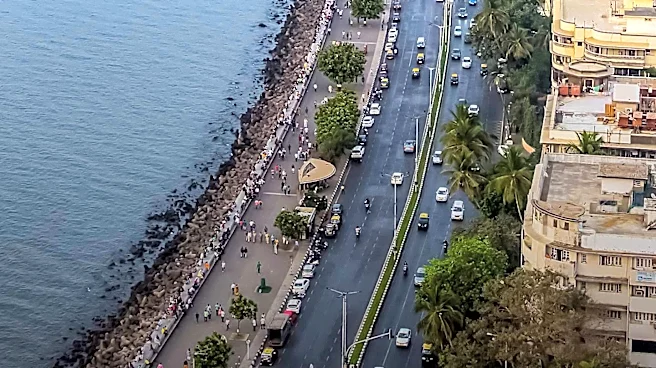
Mumbai, a major metropolis in India, is geographically situated on the western coast of the country, within the state of Maharashtra. This location places it directly on the Arabian Sea, nestled between the sea and the Sahyadri mountain ranges in the Konkan
region. The city's geographic coordinates are 19.07593° N latitude and 72.87765° E longitude. Mumbai experiences a tropical savanna climate characterized by high temperatures and humidity year-round, with average temperatures ranging from 20°C (68°F) in winter to 30°C (86°F) in summer. It has two distinct seasons: a dry winter from October to March and a wet summer from April to September, during which heavy rainfall and strong winds can lead to flooding. The city is well-connected by road and rail, with its Chhatrapati Shivaji Maharaj Terminus being one of India's busiest railway stations. Mumbai's unique geography also includes several beaches, mountainous terrain, and small islands like Elephanta Island, known for its ancient rock-cut temples.
Why It's Important?
Mumbai's strategic coastal location has been a significant driver of its economic growth and cultural richness. Its direct access to the Arabian Sea has transformed it into a crucial hub for trade, commerce, and industry, attracting people globally. The port of Mumbai alone handles over 10% of India's cargo traffic, underscoring its vital role in international trade routes. This geographical advantage has fostered a vibrant economy, making Mumbai a major center for business and industry. The city's unique blend of beachside lifestyle, mountainous backdrops, and island features also contributes to its cultural diversity and appeal as a tourist destination. The economic prosperity generated by its location supports a large population and continuous development, solidifying its status as one of India's most iconic and dynamic cities.
What's Next?
As Mumbai continues to evolve, its unique geography will likely remain a central factor in its future development. The city's role as a trade and commerce hub is expected to expand, potentially leading to further infrastructure investments in its port and transportation networks to accommodate increasing cargo and passenger traffic. Efforts to manage the impacts of its tropical climate, particularly heavy monsoon rains and potential flooding, will be crucial for sustainable growth. Urban planning will need to balance economic expansion with environmental considerations, especially concerning its coastal and mountainous regions. The ongoing appeal of Mumbai's cultural and natural attractions suggests continued growth in its tourism sector, necessitating further development of hospitality and related services. The city's strategic importance will continue to draw both domestic and international attention, influencing policy decisions related to trade, infrastructure, and urban resilience.
Beyond the Headlines
Beyond its immediate economic and logistical advantages, Mumbai's geography has shaped its identity and resilience. The constant influx of people drawn by its commercial opportunities has created a melting pot of cultures, contributing to its vibrant and diverse social fabric. The challenges posed by its climate, such as monsoon flooding, have fostered a unique urban resilience, with communities and infrastructure adapting to seasonal environmental pressures. The presence of historical sites like Elephanta Island highlights a deep cultural heritage intertwined with its natural surroundings, offering a blend of ancient history and modern dynamism. This geographical context also raises long-term questions about sustainable development in a densely populated coastal city, particularly in the face of climate change and rising sea levels. Mumbai's story is a testament to how geographical features can profoundly influence a city's destiny, shaping its economy, culture, and the daily lives of its inhabitants.