







What's Happening?
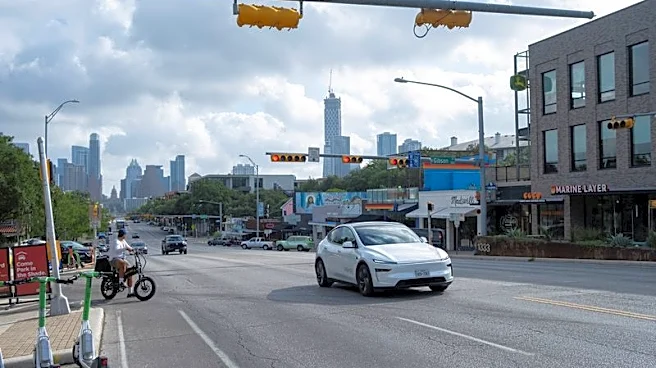
Waymo, a self-driving car company originating from Google, has launched its ride-hailing service in Nashville, Tennessee. The service, which began on April 7, allows users to order rides via an app, with the cars operating autonomously. Nashville is one
of 11 cities where Waymo is currently active, with plans to expand to 20 more. The introduction of these vehicles has sparked a mix of curiosity and concern among residents, with incidents such as a Waymo car getting stuck in traffic and another ignoring a school bus drawing attention. The Nashville Department of Transportation has received numerous complaints about the service, but local authorities have limited regulatory power due to Tennessee's Automated Vehicles Act of 2017, which prohibits local governments from banning or regulating autonomous vehicles. The service has also raised questions about the impact on human jobs, as rideshare drivers face potential displacement by autonomous technology.
Why It's Important?
The deployment of Waymo's self-driving cars in Nashville highlights significant shifts in transportation technology and policy. The presence of autonomous vehicles raises safety concerns, as well as questions about the future of human employment in the gig economy. While Waymo claims its technology reduces traffic congestion and improves safety, the lack of local regulatory control poses challenges for city officials. The introduction of these vehicles could lead to increased urban sprawl and longer commutes, as people become more comfortable with longer travel times in autonomous cars. Additionally, the economic implications for local rideshare drivers are significant, as they may lose income to driverless alternatives. The situation underscores the broader societal and economic impacts of automation and technological advancement.
What's Next?
As Waymo continues to expand its service area and fleet in Nashville, local authorities and residents will need to adapt to the presence of autonomous vehicles. The company plans to increase its fleet size and establish a large depot near the Nashville International Airport. Meanwhile, discussions around public safety, transportation policy, and the economic impact on local workers are likely to continue. Metro Nashville officials may explore ways to enhance public transit options and reduce reliance on single-occupancy vehicles. The ongoing integration of autonomous vehicles into urban environments will require careful consideration of regulatory frameworks and community engagement to address the concerns and opportunities presented by this technology.
Beyond the Headlines
The introduction of Waymo's self-driving cars in Nashville also raises ethical and privacy concerns. Residents have expressed discomfort with the presence of vehicles equipped with cameras and sensors parked in residential areas. The potential for increased surveillance and data collection by autonomous vehicles is a topic of debate, as is the broader impact on urban planning and infrastructure. The shift towards autonomous transportation may also influence cultural attitudes towards car ownership and public transit, as people weigh the convenience of driverless cars against the benefits of traditional mass transit systems. These developments highlight the need for ongoing dialogue and policy innovation to navigate the complexities of autonomous vehicle integration.