






What's Happening?
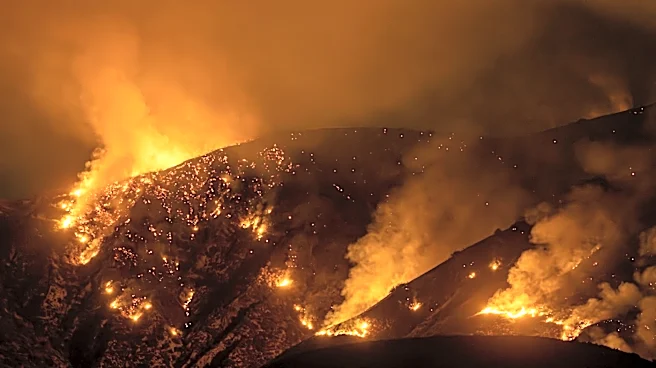
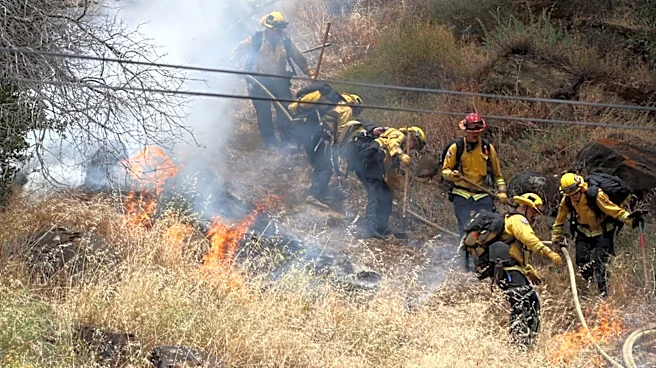
New evidence has emerged implicating Southern California Edison in the ignition of the Eaton wildfire, which devastated parts of Altadena and Pasadena. Lawyers representing property insurers have filed a court motion citing surveillance footage and data
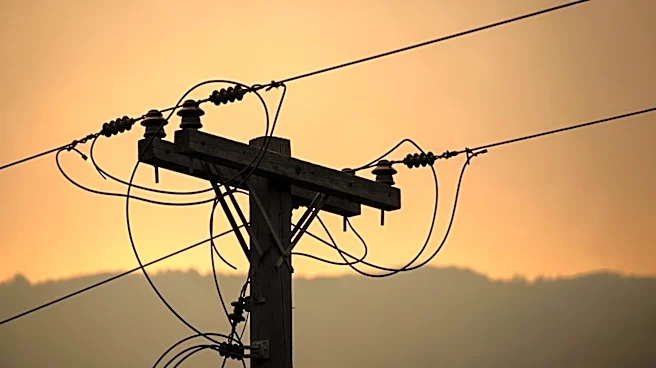
from Edison, indicating that an idle transmission line, which the utility failed to remove, was energized through induction, sparking the fire. The footage shows two bright flashes at the site of the idle line, corresponding with faults recorded on another line miles away. The fire resulted in significant property damage, and the insurers are seeking a judgment against Edison under the legal doctrine of inverse condemnation, which holds utilities liable for property destruction. Edison has not accepted responsibility, citing ongoing investigations, but has offered compensation to victims who waive their right to sue.
Why It's Important?
The case against Southern California Edison highlights the ongoing challenges utilities face in managing aging infrastructure and the legal responsibilities they bear for fire-related damages. The outcome of this case could set a precedent for how utilities are held accountable for wildfires, potentially influencing future regulatory and operational practices. The financial implications are significant, as Edison has already faced increased costs for infrastructure safety improvements, which have been passed on to consumers through higher rates. The case also underscores the broader issue of wildfire management in California, where utilities play a critical role in both prevention and response.
What's Next?
A hearing on the insurers' motion is scheduled for August 11 in Los Angeles County Superior Court. The outcome could lead to Edison being held liable for damages, potentially impacting its financial standing and operational practices. Additionally, the Los Angeles County District Attorney is investigating whether criminal charges should be filed against Edison. The utility's response to these legal challenges and its ongoing efforts to improve infrastructure safety will be closely watched by regulators, investors, and the public.