
What's Happening?
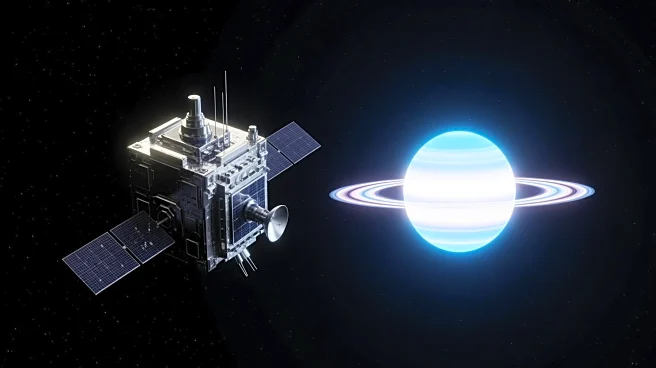
NASA has successfully launched the Pandora small satellite aboard a SpaceX Falcon 9 rocket from Vandenberg Space Force Base in California. The launch took place on January 11, 2026, and is part of a mission
to study the atmospheres of at least 20 known exoplanets. Pandora will focus on detecting atmospheric components such as hazes, clouds, and water, providing valuable data on the composition of these distant worlds. This mission is part of NASA's broader efforts to understand planetary systems beyond our own, utilizing advanced CubeSat technology to conduct detailed observations.
Why It's Important?
The launch of Pandora represents a significant step in exoplanetary research, offering insights into the atmospheric conditions of planets outside our solar system. This information is crucial for understanding the potential habitability of these worlds and the processes that govern their climates. The mission underscores NASA's commitment to advancing space exploration and scientific discovery, leveraging small satellite technology to conduct cost-effective and targeted research. The findings from Pandora could have profound implications for our understanding of planetary formation and the search for extraterrestrial life.