










What's Happening?
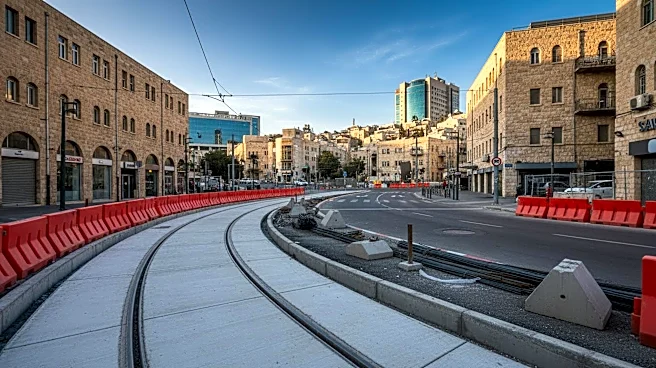
Haredi (ultra-Orthodox) protests against the construction of the Jerusalem Light Rail's Green Line have resulted in over NIS 400 million in damages since the project began six years ago. The protests, which have been particularly intense at the Bar-Ilan
Intersection, have led to significant vandalism, including the destruction of construction materials and infrastructure. These actions have forced Kfir, the company operating the light rail, to alter opening dates and routes. Despite numerous arrests and indictments for disorderly conduct and vandalism, the protests continue, causing further delays. The section between Givat Shaul and Ammunition Hill, initially set to open by the end of 2025, has been postponed to 2027 due to the ongoing disruptions.
Why It's Important?
The ongoing protests and resulting damages highlight the significant challenges faced in urban infrastructure projects, particularly in areas with strong community opposition. The delays and financial losses impact not only the project's timeline and budget but also the broader urban development and transportation planning in Jerusalem. The situation underscores the need for effective conflict resolution and community engagement strategies in public infrastructure projects. The financial burden of the damages may also affect future funding and investment in similar projects, potentially slowing down urban development and modernization efforts.
What's Next?
The Jerusalem municipality has filed civil lawsuits against the protesters to recover some of the financial losses. The ongoing legal actions and potential for further arrests may deter some protest activities, but the deep-seated opposition suggests that tensions will continue. The company and city officials may need to explore alternative routes or additional security measures to protect the construction sites and ensure project completion. The situation may also prompt a reevaluation of how infrastructure projects are planned and executed in contentious areas, potentially leading to policy changes or new approaches to community engagement.