





What's Happening?
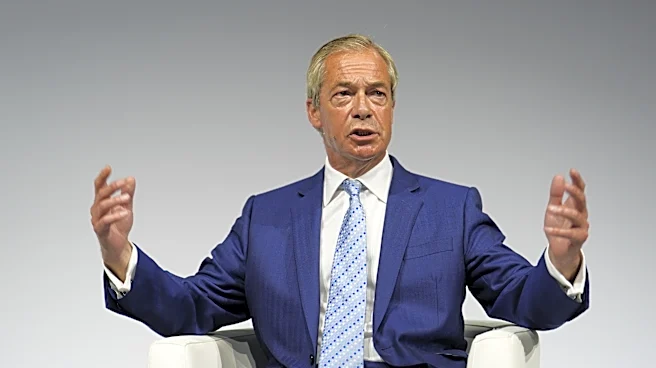
Nigel Farage, leader of Reform UK, announced his resignation from his parliamentary seat to seek re-election, aiming to clear his name from financial allegations. Farage, a known ally of President Trump, is under scrutiny for undeclared gifts, including
a significant donation from a Thailand-based cryptocurrency billionaire. The parliamentary standards watchdog is investigating these claims, which could have led to his suspension or expulsion. Farage plans to trigger a by-election for his Clacton seat, framing it as a 'people versus the establishment' contest. Despite the controversy, Farage maintains his innocence, asserting that he has not misused public funds.
Why It's Important?
Farage's decision to resign and seek re-election highlights the ongoing challenges faced by political figures in maintaining transparency and accountability. The outcome of this by-election could impact Reform UK's standing, which has been influential in local elections. Farage's leadership and the party's anti-immigration stance have drawn parallels to President Trump's nationalist policies. The investigation into Farage's finances could affect his political future and the party's credibility, especially if the standards inquiry resumes post-election. This situation underscores the broader implications of financial ethics in politics.
What's Next?
The by-election in Clacton will be a critical test for Farage and Reform UK. If Farage wins, the standards inquiry is expected to continue, potentially affecting his political career. The party's performance in this election could signal its future trajectory, especially after recent electoral losses. Stakeholders, including opposition parties and the public, will closely watch the developments, as they could influence broader political dynamics in the UK.