









What's Happening?
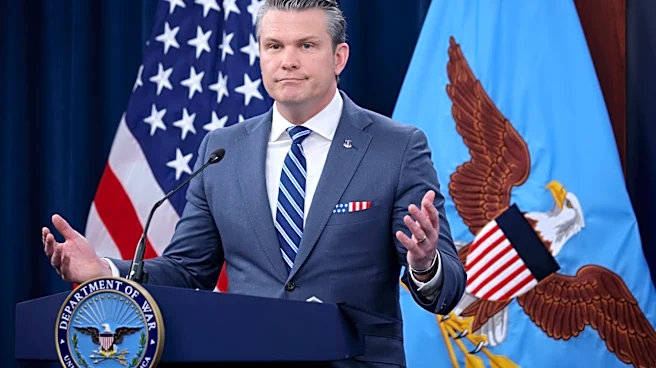
The Pentagon has issued formal guidance for mandatory testosterone testing for male service members aged 30 and older. This policy, announced by Defense Secretary Pete Hegseth in July, aims to screen troops for 'testosterone deficiency' to ensure they
operate at their 'absolute best.' While Hegseth's initial memo suggested mandatory screenings for all troops, the clinical guidance released on Thursday specifies that it applies only to male service members. The guidance for female service members regarding estrogen-based therapy is currently under review. The Pentagon's initiative aligns with a growing public interest in testosterone, often promoted by men's health influencers, though medical experts question the broad claims of its benefits. The new policy deviates from typical medical recommendations, which usually suggest testing only for men exhibiting symptoms and after two blood tests confirm low levels.
Why It's Important?
This new policy marks a significant shift in military healthcare, potentially impacting the health and readiness of thousands of male service members. By mandating testosterone screening for all male personnel over 30, the Pentagon is taking a proactive approach to what it perceives as a critical aspect of military performance. Defense Secretary Hegseth and top spokesman Sean Parnell argue that proactively identifying and treating suboptimal hormone levels will 'invest in the health of its warfighters, strengthen their performance, and maximize force readiness.' However, the policy faces scrutiny from medical experts who question the necessity and efficacy of widespread, mandatory testing, especially given that many of the broader benefits of testosterone are not fully supported by science. This could lead to a reevaluation of standard medical practices within the military and potentially influence broader public health discussions around hormone therapy.
What's Next?
The Pentagon's next steps will involve the implementation of this mandatory testing program for male service members. The guidance for female clinical practice is still under review, indicating that similar policies for women may be forthcoming. Military doctors are instructed not to prescribe testosterone therapy to those planning to have children soon, and the policy highlights the logistical challenges of managing controlled substances like injectable testosterone in deployed environments. This suggests that the Pentagon will need to address supply, custody, storage, and continuity considerations for service members on replacement therapies. The divergence from standard medical guidelines may also prompt further debate and research into the long-term effects and true benefits of widespread testosterone screening and treatment within a military context.
Beyond the Headlines
The Pentagon's new policy on mandatory testosterone testing delves into deeper implications concerning the intersection of military readiness, public health trends, and individual autonomy. While the stated goal is to enhance performance and readiness, the policy raises questions about the potential for medical overreach and the influence of popular health narratives on military policy. The emphasis on 'maximum psychological and mental readiness' through hormone therapy, as articulated by Defense Secretary Hegseth, suggests a broader philosophical shift in how the military views and manages the physiological and psychological well-being of its personnel. This could set a precedent for future interventions aimed at optimizing soldier performance, potentially blurring the lines between medical necessity and performance enhancement. Furthermore, the policy's cautious stance on side effects and fertility, alongside the logistical hurdles of deployment, underscores the complex ethical and practical challenges inherent in such a large-scale medical intervention.