




What's Happening?
Tone Eberhart, owner of Scarlet's Crumb Bakery in Fayetteville, Georgia, has initiated 'Operation Break Bread' to provide lunches for local children who typically rely on school meals, especially during the Thanksgiving holiday break. Each lunch, costing
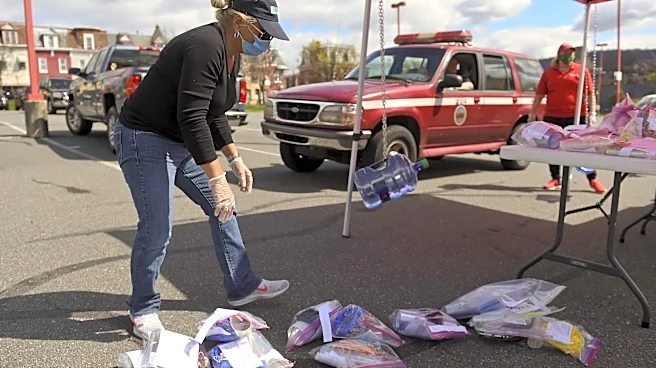
approximately $3.19 to prepare, includes a peanut butter and jelly sandwich, fruit, a drink, chips, and a granola bar. The program initially aimed for 50 meals but quickly surpassed 100, with aspirations to reach more children. Eberhart's motivation stems from his own childhood experiences with food stamps and government assistance in Atlanta's West End. Volunteers, including Patricia Maugeri and Jodan Gilleland, are assisting in assembling the meals. Local businesses, such as Junk Mama's General Store, are also participating by serving as donation drop-off points for food items or financial contributions. Data from Georgia's fiscal 2026 school meal eligibility indicates that about 71% of students at North Fayette Elementary qualify for free or reduced-price meals, underscoring the significant need for such initiatives in the community.
Why It's Important?
This initiative highlights the persistent issue of child food insecurity in the U.S., particularly during school breaks when access to school-provided meals is interrupted. For many families, these breaks can exacerbate financial strains, making it difficult to ensure children receive adequate nutrition. Programs like 'Operation Break Bread' serve as crucial community-led safety nets, directly addressing immediate needs and preventing hunger among vulnerable populations. The high percentage of students qualifying for free or reduced-price meals in local schools demonstrates a systemic challenge that extends beyond individual family circumstances, pointing to broader economic disparities. The involvement of local businesses and volunteers also underscores the power of community solidarity in tackling social issues, providing a model for other areas facing similar challenges. Such efforts not only provide sustenance but also foster a sense of community support and reduce the burden on parents during holiday periods.
What's Next?
Eberhart and his team of volunteers plan to continue preparing additional sandwiches for several local schools as Thanksgiving break approaches, aiming to expand the reach of 'Operation Break Bread.' The program encourages ongoing community involvement through donations of food or money via Junk Mama's General Store, or by volunteering time to help prepare lunches. The success and expansion of this initiative could inspire similar programs in other communities facing child food insecurity during school holidays. Continued support from local businesses and residents will be crucial for the sustainability and growth of 'Operation Break Bread,' potentially leading to its extension beyond the Thanksgiving break to other school holidays. The program's visibility may also draw attention to the broader issue of food insecurity, encouraging more systemic solutions or increased public and private funding for food assistance programs.
Beyond the Headlines
The personal motivation behind 'Operation Break Bread'—Eberhart's own experience with food insecurity—adds a profound layer of empathy and understanding to the initiative. This personal connection often drives more effective and sustainable community solutions, as it is rooted in direct experience of the problem. The program also subtly challenges the perception that affluence negates hardship, as Eberhart noted, 'Even though it looks like people have a lot down here, you never know who's struggling.' This highlights the often-hidden nature of food insecurity, which can affect families across various socioeconomic strata. Furthermore, the initiative reinforces the idea that community support can fill critical gaps left by broader social welfare systems, fostering resilience and mutual aid. It also serves as a reminder of the ongoing need for robust social safety nets and accessible food programs to ensure no child goes hungry, regardless of school schedules or family income.