
What's Happening?
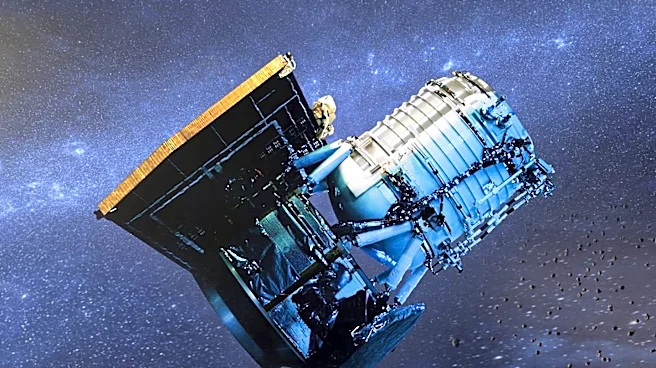
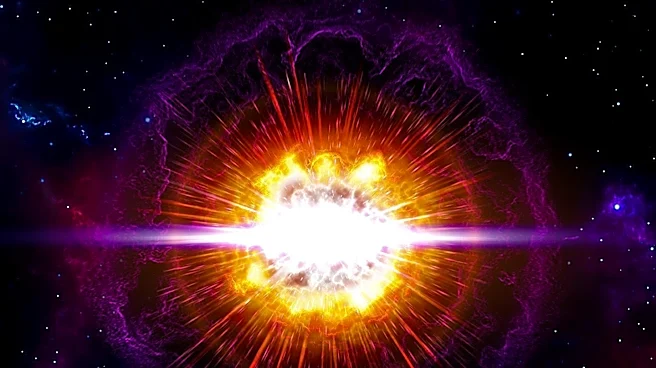
Astronomers have captured a rare star explosion, known as a supernova, for only the second time in 20 years. The event, detected by the Einstein Probe satellite, was observed by a network of telescopes, including the NSF NOIRLab facilities. The supernova, named
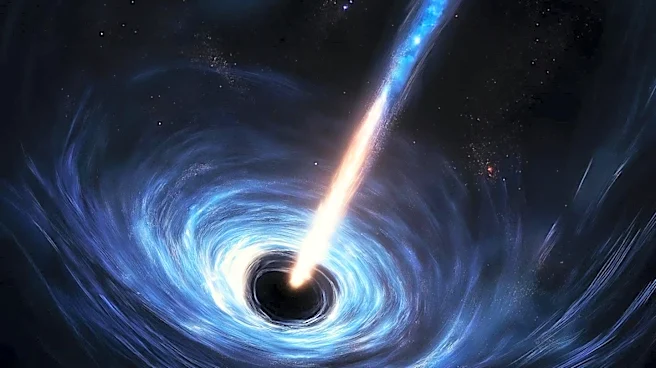
SN 2026gzf, was identified as a broad-lined Type Ic supernova, typically associated with gamma-ray bursts. However, this explosion did not exhibit the expected gamma-ray bursts, suggesting a 'choked' jet. The findings were published in The Astrophysical Journal Letters.
Why It's Important?
This discovery provides a unique opportunity to study the dynamics of supernova explosions and the conditions leading to such events. The absence of gamma-ray bursts challenges existing models and suggests new mechanisms at play in these powerful cosmic explosions. Understanding these processes is crucial for astrophysics, as it helps scientists explore the life cycles of stars and the formation of cosmic structures. The findings also highlight the importance of coordinated global efforts in astronomy, demonstrating the potential for future discoveries through collaborative observations.
What's Next?
Further analysis of the collected data will aim to uncover more details about the star's structure and environment before the explosion. The Vera C. Rubin Observatory and other telescopes will continue to monitor the supernova, providing long-term data on its evolution. This research will contribute to the broader understanding of supernovae and their role in the universe. Future observations of similar events will help refine models of stellar evolution and the mechanisms driving supernova explosions.