


What's Happening?
Utah State University (USU) Extension has launched the Agricultural Water Demonstration, Research and Implementation Program (Ag-DRIP) to help farmers in the Colorado River Basin conserve water. This five-year initiative, funded by the Colorado River Authority
of Utah and Central Utah Water Conservancy District, focuses on optimizing agricultural water use and building drought resilience. Researchers are working directly with participating farmers to evaluate their current irrigation systems, identify inefficiencies, and recommend improvements. This includes testing various sprinkler designs, providing soil moisture sensors, flow-monitoring equipment, and conducting soil and irrigation-water analysis. The program aims to give farmers better data on their water usage and explore how changes in equipment or practices can lead to greater efficiency. The Ag-DRIP program was initiated in response to the severe drought experienced in Utah agriculture from 2020 to 2022.
Why It's Important?
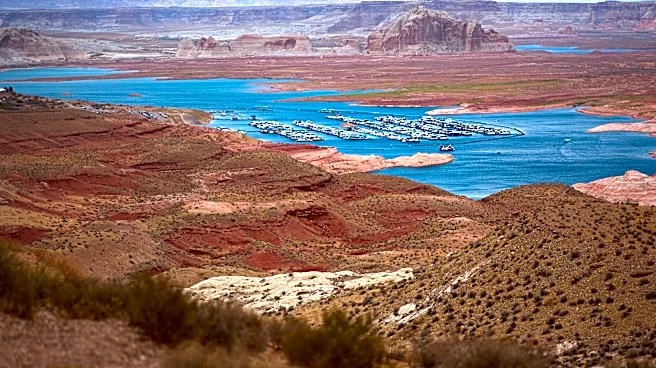
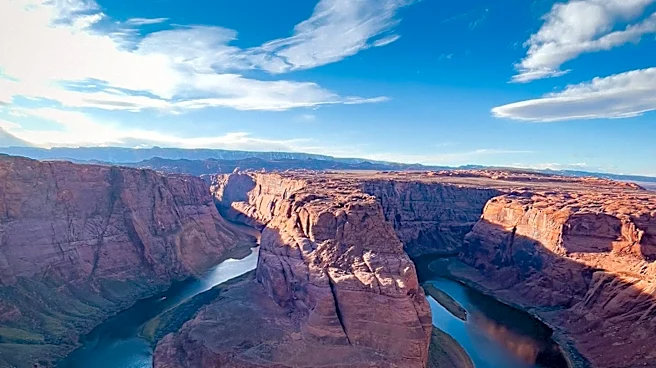
The Ag-DRIP program is crucial for U.S. agriculture, particularly in the Western states, as it addresses the critical issue of water scarcity in the Colorado River Basin. This basin supplies water to seven states and supports vital sectors including agriculture, urban communities, and hydropower. By helping farmers optimize water use, the program contributes to the long-term sustainability of agricultural practices in a region increasingly affected by drought. Efficient water management in agriculture can reduce the strain on shared water resources, potentially mitigating conflicts among states and various water users. The program's focus on data-driven recommendations and voluntary participation empowers farmers to make informed decisions, which can lead to significant water savings when scaled across numerous farms. This initiative also highlights the importance of research and collaboration between academic institutions and agricultural communities in tackling environmental challenges.
What's Next?
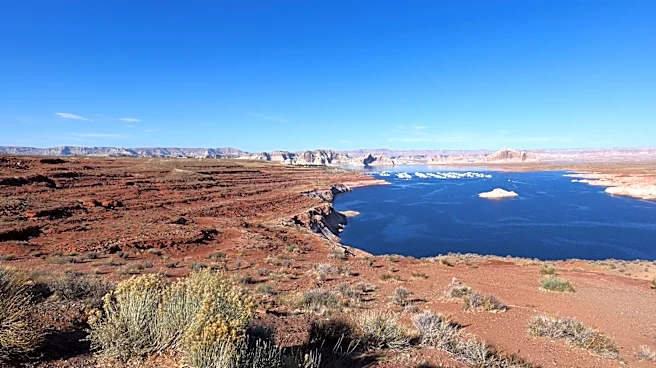
The Ag-DRIP program is set to continue for approximately another year, with the goal of developing irrigation management plans for up to 125 farms, adding about 25 new producers annually. Researchers anticipate providing clear recommendations for farmers using wheel lines based on the preliminary positive results. The data collected on water usage and the effectiveness of various conservation methods will be crucial for future policy decisions and agricultural practices in the Colorado River Basin. As negotiations continue among the seven Basin states regarding post-2026 water operating frameworks for Lake Powell and Lake Mead, the insights gained from programs like Ag-DRIP could inform strategies for equitable water sharing and conservation. The federal government is expected to make a decision on these operating rules before the 2027 water year, making ongoing efforts to improve water use increasingly vital.
Beyond the Headlines
Beyond the immediate goal of water conservation, the Ag-DRIP program touches upon deeper implications for the future of agriculture and regional cooperation in the U.S. West. The program's emphasis on voluntary participation and tailored solutions acknowledges the diverse needs and operational realities of individual farms, fostering trust and collaboration rather than imposing top-down mandates. This approach could serve as a model for addressing other resource management challenges where local engagement is key. Furthermore, the integration of technology, such as soil moisture sensors and remote irrigation control, signifies a broader shift towards precision agriculture, which can enhance efficiency and reduce environmental impact. The success of such localized efforts, when aggregated, could contribute significantly to regional water security and potentially influence national water policy discussions, underscoring the interconnectedness of local actions and broader environmental and economic stability.