






What's Happening?
Cuban President Miguel Díaz-Canel has announced the launch of a new radio program titled 'Criterio Compartido' (Shared Criterion) on Radio Rebelde. This initiative aims to foster direct communication with the Cuban populace, addressing national problems,
listening to public concerns, and providing accountability for government actions. The program, which will air every 15 days, features Díaz-Canel as host alongside journalist Bárbara Betancourt and will be integrated into the state radio station's informational program 'Haciendo Radio.' This marks Díaz-Canel's renewed effort in direct communication, following the discontinuation of his podcast 'Desde la Presidencia' after 32 episodes. The President emphasized that 'Criterio Compartido' will be a platform for citizen participation, transparency, and consensus-building, promising to discuss national issues 'with an open chest' and explain government policies.
Why It's Important?
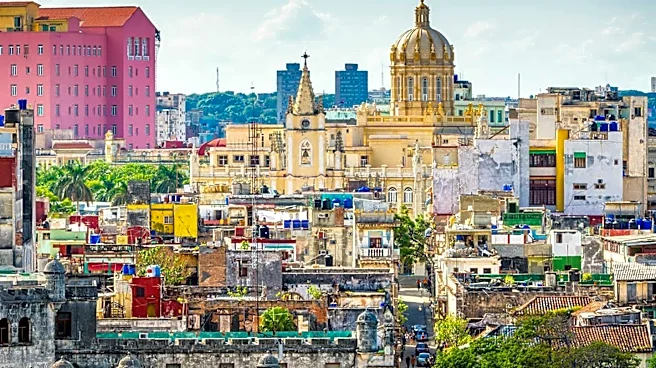
The launch of 'Criterio Compartido' is significant as it represents the Cuban government's attempt to manage public discourse and address growing discontent amid a severe national crisis. Cuba is currently facing widespread shortages of basic goods, deteriorating services, and extensive power outages, which have led to increased public frustration. By offering a platform for 'transparency' and 'citizen participation,' the government seeks to project an image of responsiveness and engagement. However, the effectiveness and true transparency of this initiative will be closely watched, particularly regarding how critical opinions and public questions will be handled. Previous attempts at direct communication, like the 'Desde la Presidencia' podcast, have been criticized for their limited scope and eventual cessation, raising questions about the long-term commitment to genuine dialogue and accountability.
What's Next?
The immediate next step will be the premiere of 'Criterio Compartido' and the observation of how the program addresses the promised transparency and citizen participation. Key aspects to monitor include the selection process for public opinions, questions, or calls, and whether citizens will have the opportunity to directly question President Díaz-Canel on governmental decisions. The program's ability to genuinely engage with the public's concerns, especially regarding the ongoing economic and energy crises, will be crucial. The government's handling of critical feedback and its willingness to implement changes based on public input will determine the program's credibility and its potential to alleviate public dissatisfaction. The frequency of the program, airing every 15 days, suggests a sustained effort, but its impact will depend on its content and the government's follow-through.
Beyond the Headlines
Beyond the stated goals of transparency and participation, this radio program can be seen as a strategic move by the Cuban government to control the narrative during a period of heightened social and economic instability. In a country with limited independent media, state-controlled platforms like Radio Rebelde play a crucial role in shaping public opinion. The emphasis on 'building consensus' could also be interpreted as an effort to unify public sentiment behind government policies, rather than fostering genuine dissent or critical debate. The program's success or failure in addressing the deep-seated issues facing Cuba could influence public trust in the government and potentially impact social stability. It also highlights the ongoing challenge for authoritarian regimes to balance control with the need for public engagement, especially in the digital age where information, even if censored, can circulate more freely.