








What's Happening?
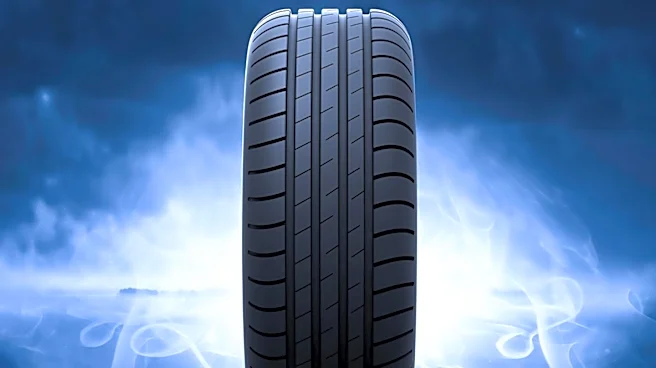
The California Energy Commission (CEC) has unanimously approved new regulations that will restrict the sale of replacement tires not meeting specific energy efficiency standards. This decision, stemming from a 2003 state law (AB 844), aims to ensure that replacement tires sold
in California are, on average, as energy-efficient as those originally equipped on new vehicles. The regulations will be implemented in two phases: the first beginning in 2029, limiting tires to a maximum rolling resistance level of 9.1 newtons per kilonewton (N/kN), and the second phase starting in 2033, lowering the standard to 7.2 N/kN. The CEC conducted tests on 537 types of tires to establish these standards. While the CEC anticipates significant savings for consumers, tire manufacturers, including Goodyear, have expressed concerns about increased costs and the potential elimination of a large percentage of currently available tires from the California market.
Why It's Important?
These new regulations are significant for California's consumers and the automotive industry. The CEC projects that Californians could save approximately $1 billion annually in fuel and electricity costs, with individual drivers potentially saving $79 within four months under Phase 1 and $153 within seven months under Phase 2. This initiative is framed as a consumer protection measure, shielding the public from higher long-term costs associated with less efficient tires. However, tire manufacturers argue that these rules will increase costs for consumers and could eliminate an estimated 70% of tires currently sold in California by 2033. This could lead to a more limited selection of tires for consumers and potentially higher prices for compliant options, impacting both tire retailers and manufacturers operating within the state. The regulations also set a precedent as California becomes the first state to implement such a rule for tire efficiency.
What's Next?
The first phase of the new tire efficiency regulations will take effect in 2029, followed by the second phase in 2033. The California Energy Commission plans to enforce these rules by utilizing a test lab to verify manufacturers' data and by checking with retailers. Conversations with the industry are expected to continue as the rule is implemented. Major tire manufacturers like Bridgestone and Michelin have raised concerns about the enforcement mechanisms and the potential for an uneven playing field, suggesting ongoing dialogue and adjustments may be necessary. Consumers will need to adapt to a changing market for replacement tires, potentially facing higher upfront costs for more efficient options, though the CEC projects long-term savings on fuel and electricity. The long-term impact on tire availability and pricing will become clearer as the implementation dates approach.
Beyond the Headlines
The California Energy Commission's new tire efficiency regulations highlight a broader trend towards increased environmental and energy efficiency standards across various sectors in California. This move reflects the state's commitment to reducing carbon emissions and promoting sustainable practices, even in areas not traditionally associated with energy regulation. The debate between consumer savings and potential increased product costs for manufacturers and consumers underscores the complex economic and environmental trade-offs inherent in such policies. This initiative could also influence other states or even federal policy, potentially leading to a nationwide shift towards more energy-efficient tire standards. The focus on 'rolling resistance' as a key metric for efficiency could drive innovation in tire manufacturing, pushing companies to develop new materials and designs that meet stricter environmental criteria while maintaining performance and safety.