


What's Happening?
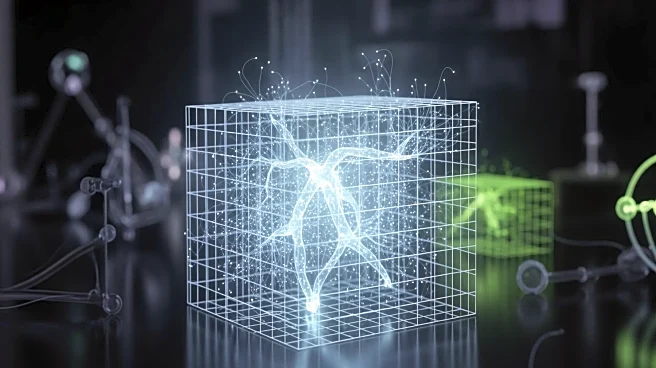
A new protocol has been developed for investigating mechanical forces during early angiogenic sprouting using three-dimensional traction force microscopy (3D TFM) in hydrogel matrices. This method allows for the detailed study of cellular forces and matrix
degradation in a dynamic, multicellular environment. The protocol emphasizes best practices for data acquisition and analysis using open-source software, providing a reproducible system to study angiogenesis. This advancement is significant for understanding the mechanical regulation of angiogenesis, a critical process in tissue development and repair. The protocol also includes methods for immunofluorescence analysis and retrieval of angiogenic sprouts for downstream sequencing, offering a comprehensive approach to studying cellular interactions in 3D environments.
Why It's Important?
The ability to study mechanical forces in 3D environments is crucial for understanding angiogenesis, which plays a vital role in various physiological and pathological processes, including wound healing and cancer progression. This protocol provides researchers with a powerful tool to investigate the complex interactions between cells and their extracellular matrix, leading to insights that could inform the development of new therapeutic strategies. By enabling high-throughput data acquisition and analysis, this method facilitates the study of angiogenesis in response to different cellular and environmental cues, potentially leading to breakthroughs in regenerative medicine and cancer treatment.