






What's Happening?
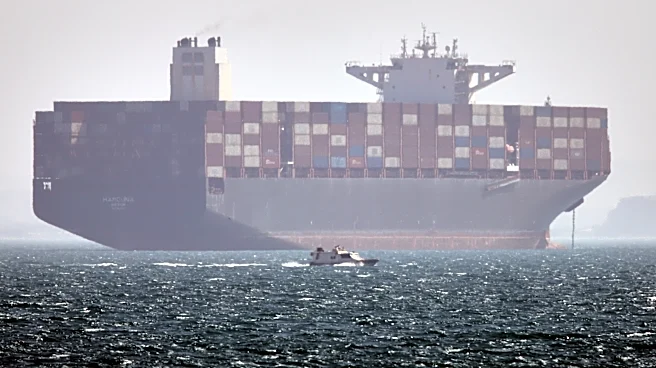
President Trump has requested amendments to the draft of a US-Iran ceasefire deal, focusing on specifics related to Iran's enriched uranium and the reopening of the Strait of Hormuz. The proposed Memorandum of Understanding (MoU) aims to initiate negotiations
towards a final agreement on Iran's nuclear program. While there is an understanding among key negotiators, including Iranian Foreign Minister Abbas Araghchi and US envoy Steve Witkoff, the deal awaits approval from Trump and Iranian Supreme Leader Mojtaba Khamenei. The amendments are intended to strengthen the deal's provisions, ensuring that US interests are safeguarded.
Why It's Important?
The amendments sought by President Trump highlight the complexities of negotiating with Iran, particularly concerning nuclear disarmament and regional security. The successful implementation of the MoU could pave the way for a more comprehensive agreement, potentially easing tensions in the Middle East and enhancing global security. However, the delay in finalizing the deal underscores the challenges of diplomatic negotiations, with both sides needing to balance domestic pressures and international expectations. The outcome will significantly impact US-Iran relations and could influence broader geopolitical dynamics, including alliances and regional power balances.
What's Next?
The next phase involves awaiting Iran's response to the proposed amendments, with the timeline for finalizing the MoU remaining uncertain. The US administration is prepared to wait for a deal that aligns with its strategic objectives, while Iran's willingness to compromise will be crucial. The negotiations are expected to continue, with potential involvement from international mediators to facilitate dialogue. The broader international community will closely watch these developments, as the outcome could have far-reaching implications for regional stability and global non-proliferation efforts.