

What's Happening?
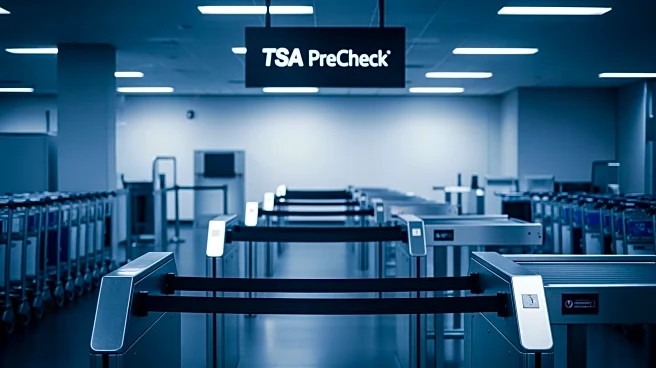
The Department of Homeland Security (DHS) has announced the temporary suspension of TSA PreCheck and Global Entry programs due to a partial government shutdown. This decision impacts millions of travelers who rely on these programs for expedited airport
security and customs processing. DHS Secretary Kristi Noem stated that the focus is now on the general traveling public at airports and ports of entry, leading to the suspension of courtesy and special privilege escorts. The shutdown, which affects only DHS, stems from a congressional impasse over immigration enforcement policy. Essential DHS employees, including approximately 63,000 TSA agents, continue to work without pay. The suspension is set to begin on Sunday at 6 a.m. ET, marking the first nationwide halt of these programs during a shutdown.
Why It's Important?
The suspension of TSA PreCheck and Global Entry programs is significant as it disrupts the travel plans of millions of U.S. citizens and international passengers. These programs, which have over 40 million vetted members, are crucial for reducing wait times at airport security and customs. The shutdown highlights the broader implications of political stalemates on public services and national security. Travelers will face longer lines and potential delays, affecting the efficiency of the U.S. air travel system. The decision also underscores the financial strain on DHS employees working without pay, raising concerns about workforce morale and operational effectiveness.
What's Next?
As the suspension takes effect, travelers enrolled in TSA PreCheck will need to undergo standard security screening, potentially leading to increased congestion at airports. The impact on Global Entry users remains uncertain, though disruptions at customs and passport control are anticipated. The situation may prompt further political debate as Democrats criticize the move as punitive, while Republicans push for stricter immigration enforcement. The resolution of the shutdown and restoration of these programs depend on congressional negotiations, with potential implications for future government operations and public trust in federal agencies.