







What's Happening?
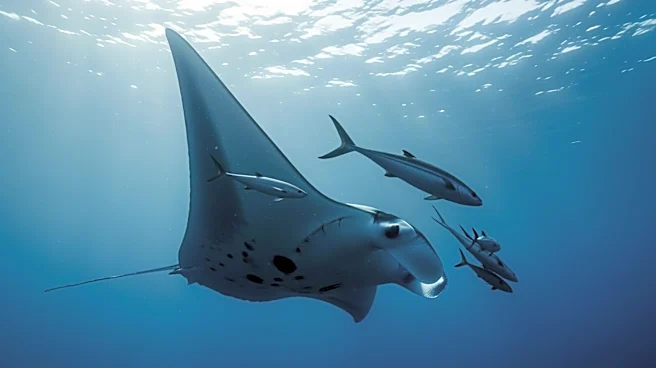
A recent study has uncovered a surprising behavior of remoras, also known as suckerfish, which are known for attaching themselves to larger marine animals like manta rays. The study, published in the journal Ecology and Evolution, reveals that remoras sometimes
hide inside the cloacal openings of manta rays, a behavior previously undocumented. This discovery was made when a free diver observed a remora quickly inserting itself into a manta ray's cloaca after being startled. The cloaca is a multi-purpose opening used for reproduction, waste elimination, and copulation. The study, led by Emily Yeager, a doctoral candidate at the University of Miami, suggests that this behavior might not be as harmless as previously thought, potentially causing discomfort or harm to the manta rays.
Why It's Important?
The findings challenge the traditional understanding of the symbiotic relationship between remoras and their hosts. Historically, these relationships have been categorized as mutualistic or commensal, where either both parties benefit or one benefits without harming the other. However, the new evidence suggests a more parasitic interaction, where the remoras may cause physical harm or discomfort to the manta rays. This revelation could lead to a reevaluation of how symbiotic relationships are classified in marine biology. Understanding these dynamics is crucial for marine conservation efforts, as it affects how species interactions are managed and preserved in their natural habitats.
What's Next?
Further research is needed to explore the full extent and implications of this behavior. Scientists may conduct more detailed observations and studies to determine how widespread this behavior is among remoras and other marine species. Additionally, the impact of this behavior on the health and reproductive success of manta rays could be a focus of future studies. These findings could influence conservation strategies and policies aimed at protecting marine ecosystems and the species that inhabit them.
Beyond the Headlines
The study highlights the complexity of symbiotic relationships in the ocean, suggesting that they may exist on a continuum rather than in discrete categories. This perspective could lead to a broader understanding of ecological interactions, similar to human relationships that vary over time. The research also underscores the importance of direct observation in uncovering hidden behaviors in marine life, which can significantly alter scientific understanding and conservation approaches.