




What's Happening?
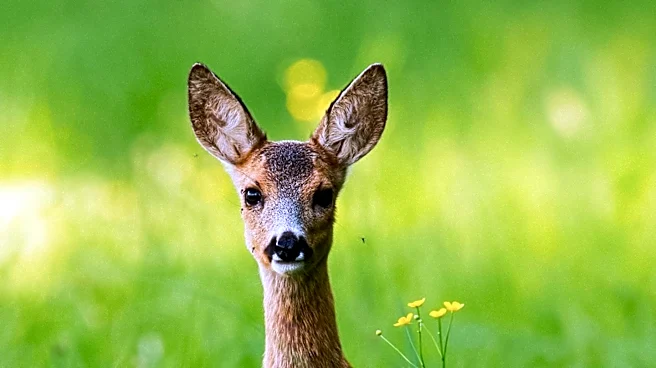
A recent study has revealed that wild deer are significant contributors to methane emissions, releasing around 3 million tonnes of the greenhouse gas into the atmosphere each year. This figure, while substantial, is a small fraction compared to the emissions from
domesticated livestock, which account for a much larger share of global methane emissions. The study, published in the Journal of Geophysical Research: Biogeosciences, highlights the role of wild ruminants, such as deer, moose, and llamas, in methane production. These animals rely on bacteria to digest fibrous plants, a process that releases methane.
Why It's Important?
Methane is a potent greenhouse gas with a significant impact on climate change. Understanding the sources of methane emissions is crucial for developing effective strategies to mitigate climate change. While the contribution of wild deer is relatively small compared to livestock, it underscores the importance of considering all sources of emissions in climate models. This research could inform conservation and land management practices aimed at reducing methane emissions from natural ecosystems.
Beyond the Headlines
The study raises questions about the balance between wildlife conservation and climate change mitigation. As efforts to protect and restore wildlife populations continue, understanding their environmental impact becomes increasingly important. This research may lead to discussions on how to manage wildlife populations in a way that minimizes their contribution to greenhouse gas emissions while preserving biodiversity.