






What's Happening?
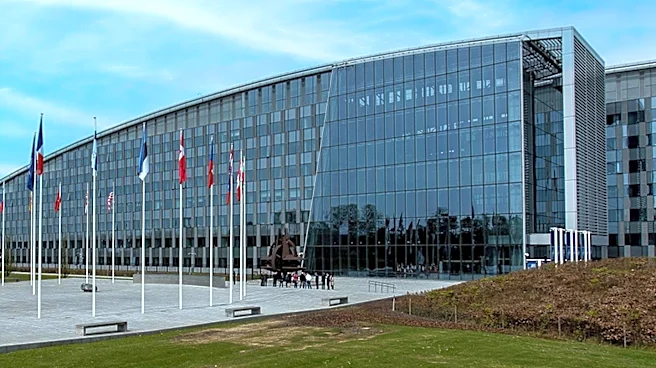
During the 36th NATO Summit in Ankara, a significant strategic shift was announced, urging European allies to take on more conventional defense responsibilities. This change allows the United States to focus more on the Indo-Pacific region, addressing
rising security challenges there. NATO, established in 1949, is a military alliance based on collective defense under Article 5, which considers an attack on one member as an attack on all. The summit highlighted the need for burden-sharing among NATO members, with Europe expected to increase defense spending and capabilities.
Why It's Important?
The strategic shift within NATO is crucial as it reflects the changing geopolitical landscape. By encouraging European countries to invest more in their defense capabilities, NATO aims to reduce dependency on U.S. military resources. This could lead to a stronger European defense industry, boosting investments in areas like artificial intelligence, cybersecurity, and missile systems. The U.S. focus on the Indo-Pacific region highlights the growing importance of countering Chinese influence, which could impact global power dynamics. For India, this transformation presents opportunities for enhanced defense cooperation and technology partnerships with European nations.
What's Next?
As NATO transitions into this new strategic phase, European countries are expected to increase their defense spending and develop indigenous military capabilities. The U.S. will likely continue to shift its strategic focus towards the Indo-Pacific, potentially leading to increased collaboration with countries in that region, including India. The ongoing Russia-Ukraine conflict and burden-sharing disagreements among NATO members may pose challenges to this transformation. However, the expansion of defense industries and increased focus on the Indo-Pacific could reshape global security dynamics.